


Lead-Acid vs LiFePO4 Batteries for Floor Scrubbers: Which Is Better for OEM Cleaning Equipment?
For floor scrubbers, sweepers, and industrial cleaning machines, battery choice affects runtime, charging speed, machine weight, maintenance cost, and long-term reliability. This guide compares lead-acid and LiFePO4 batteries from an OEM equipment design perspective.
Why Battery Choice Matters in Floor Cleaning Machines
Commercial floor scrubbers and sweepers often work in supermarkets, warehouses, hospitals, factories, airports, and public facilities. These machines need stable power output, predictable runtime, safe charging, and minimal downtime. For OEM cleaning equipment manufacturers, the battery is not just a replaceable component. It is part of the machine’s operating experience.
Traditional lead-acid batteries remain common because they are familiar and have a lower initial purchase price. However, many cleaning equipment projects are moving toward LiFePO4 battery packs because they can reduce maintenance, improve energy efficiency, support faster charging, and provide better usable capacity in demanding operating schedules.
Chalongfly provides custom motive power battery solutions for industrial equipment, including dedicated LiFePO4 battery packs for floor cleaning machines.
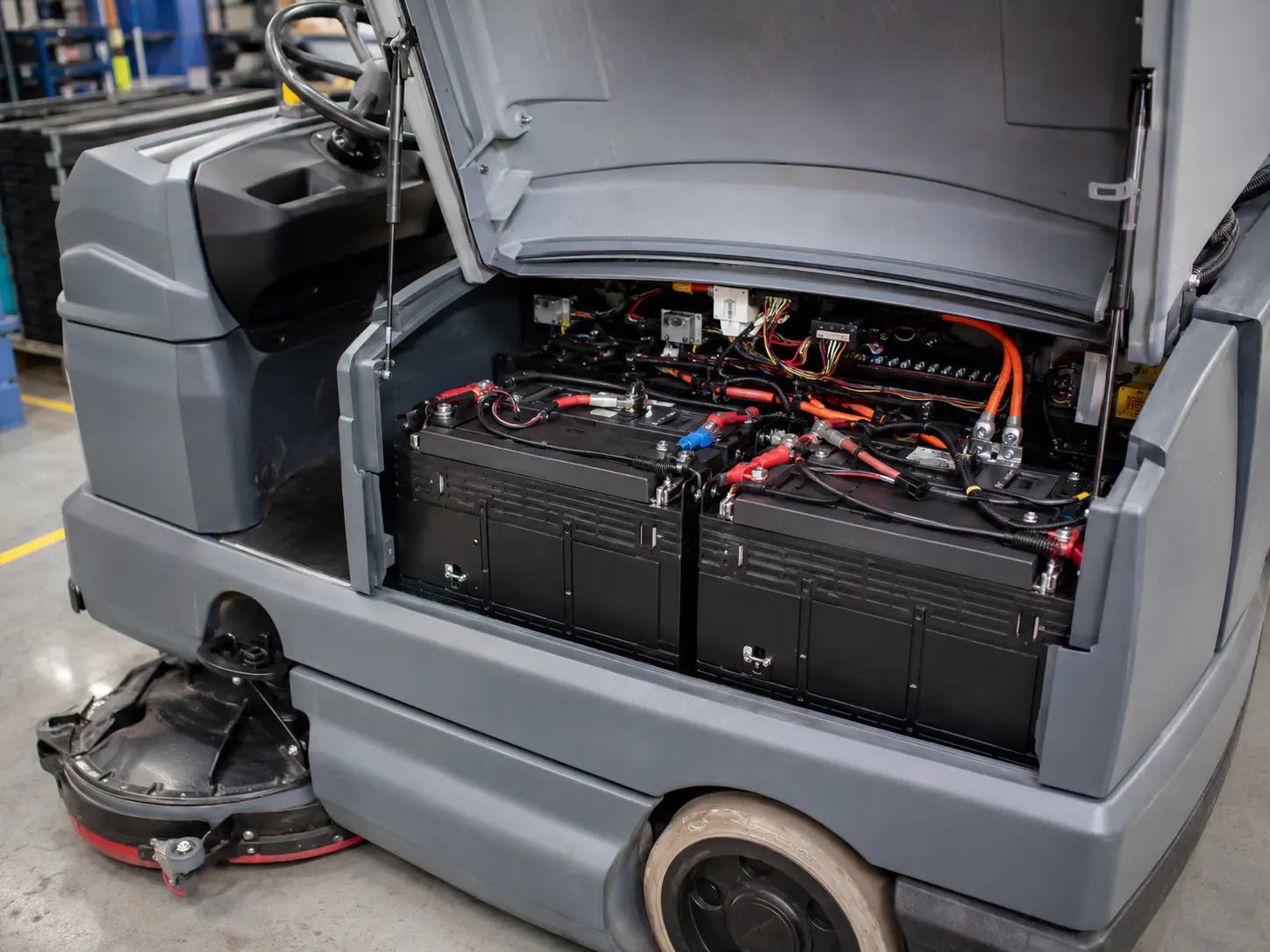
Lead-Acid Batteries: Familiar, Low Initial Cost, but Maintenance-Heavy
Lead-acid batteries have been used in floor scrubbers for many years. They are widely available, familiar to service teams, and usually less expensive at the time of purchase. For price-sensitive equipment models or replacement markets, lead-acid can still be a practical option.
The challenge is that the lower initial cost does not always mean lower total cost. Floor cleaning machines often operate every day, sometimes across multiple shifts. Under this usage pattern, lead-acid batteries may require longer charging time, more frequent replacement, and additional maintenance attention. Flooded lead-acid batteries may also require watering and ventilation considerations, while sealed lead-acid batteries still carry weight and usable-capacity limitations.
LiFePO4 Batteries: Higher Initial Cost, Better Long-Term Equipment Value
LiFePO4 batteries are increasingly used in industrial cleaning equipment because they are better suited for frequent charging, partial-state-of-charge operation, and long daily duty cycles. Compared with lead-acid batteries, LiFePO4 battery packs generally provide a more stable voltage curve and better usable energy, helping the machine maintain more consistent performance during operation.
For OEMs, LiFePO4 also creates more room for design optimization. A custom battery pack can be developed around the machine’s voltage platform, available battery compartment, peak discharge current, charger requirements, CANBus or RS485 communication, BMS protection logic, connector layout, and enclosure structure.
Lead-Acid vs LiFePO4 for Floor Scrubbers: Detailed Comparison
| Factor | Lead-Acid Battery | LiFePO4 Battery | OEM Recommendation |
|---|---|---|---|
| Initial Cost | Lower upfront Often attractive for entry-level or replacement markets. |
Higher upfront Requires a higher initial battery investment. |
Use total cost of ownership instead of only comparing purchase price. |
| Cycle Life | Usually shorter under frequent deep-cycle operation. | Longer service life Better suited for frequent cycling and daily use. |
LiFePO4 is usually better for rental fleets, commercial facilities, and multi-shift cleaning equipment. |
| Charging Speed | Typically slower and less flexible. | Can support faster and opportunity charging when properly designed. | Useful when machines need short charging windows between cleaning shifts. |
| Maintenance | May require maintenance, inspection, and stricter charging discipline. | Low maintenance No watering and less routine service attention. |
LiFePO4 reduces service burden for commercial cleaning operators. |
| Weight | Heavier, which may affect machine efficiency and handling. | Lighter for the same usable energy range. | Weight reduction can support better maneuverability and machine layout flexibility. |
| Voltage Stability | Voltage drops more noticeably during discharge. | Flatter voltage curve and more consistent power delivery. | LiFePO4 can help maintain stable cleaning performance during the operating cycle. |
| BMS and Communication | No advanced battery management system in basic configurations. | Can integrate BMS protections, communication, data reporting, and fault logic. | Recommended for OEM platforms that need smart battery monitoring. |
| Customization | Limited customization beyond battery size and terminal layout. | Can be customized for voltage, capacity, casing, connectors, harness, BMS, and charger. | LiFePO4 is stronger for OEM/ODM cleaning equipment projects. |
When Lead-Acid May Still Make Sense
Lead-Acid Can Be Suitable When:
- The machine is used occasionally rather than daily.
- The target market is highly price-sensitive.
- The equipment design is already fixed around lead-acid size and weight.
- Charging time is not a major operational problem.
- The customer has an existing service system for lead-acid maintenance.
LiFePO4 Is Usually Better When:
- The machine works every day or across multiple shifts.
- Operators need shorter charging time and less downtime.
- The OEM wants a lighter and more efficient battery system.
- The project requires BMS protection and communication.
- The equipment brand wants lower long-term service cost.
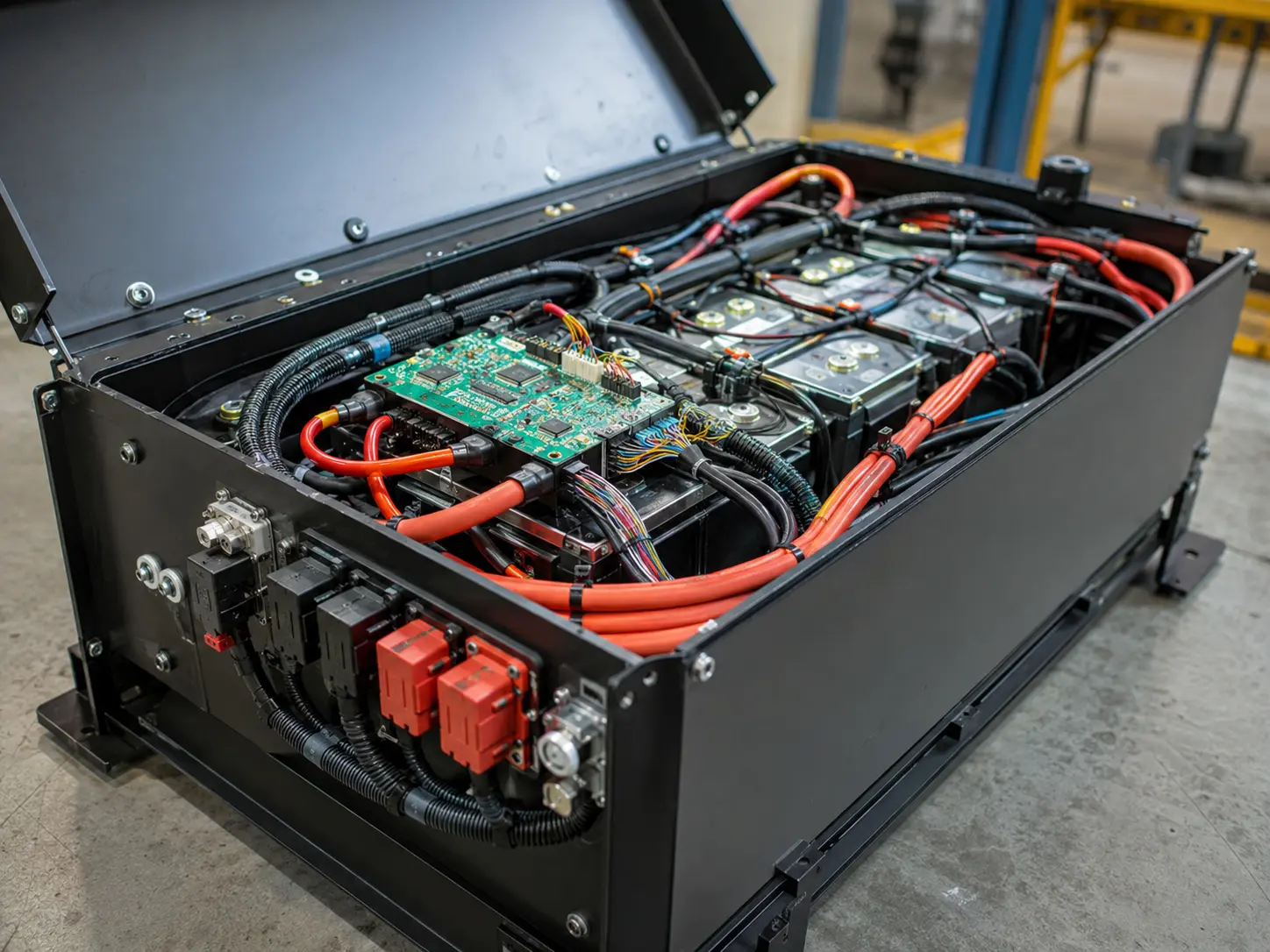
Important Design Points for LiFePO4 Floor Scrubber Battery Packs
A successful lithium upgrade is not only about replacing one battery box with another. For floor cleaning machine OEMs, the battery pack must match the machine platform and service environment. The following points should be confirmed before battery development.
Chalongfly can support battery pack structure, BMS configuration, connector selection, and related battery wiring harness integration for OEM equipment projects. For projects requiring special connectors, charging cables, or communication interfaces, our custom cable assembly capability can help simplify system integration.
Total Cost of Ownership: The Real OEM Comparison
Many buyers compare only the battery purchase price. For commercial floor cleaning equipment, this is incomplete. OEMs should compare the total cost of ownership across the machine’s service life. This includes battery replacement frequency, maintenance labor, charging downtime, machine availability, warranty risk, shipping weight, and user satisfaction.
A lead-acid battery may look cheaper at the beginning, but if it needs more frequent replacement, longer charging, and more service attention, the real operating cost may become higher. LiFePO4 battery packs are often more suitable for customers who want stable runtime, fewer interruptions, and predictable fleet operation.
Best Applications for LiFePO4 Floor Scrubber Batteries
LiFePO4 battery packs are especially useful in professional cleaning environments where machines are expected to work reliably every day. Typical applications include:
- Ride-on floor scrubbers for warehouses and logistics centers
- Walk-behind scrubbers for supermarkets and shopping malls
- Industrial sweepers used in factories and workshops
- Cleaning machines for hospitals, schools, airports, and stations
- Rental fleet cleaning equipment requiring low maintenance
- OEM cleaning equipment platforms requiring custom battery integration
For these scenarios, battery performance affects not only the machine specification sheet, but also the customer’s daily operation. Longer service intervals and easier charging can become important selling points for equipment brands.
What Information Should OEMs Provide Before Requesting a Battery Quote?
To design a reliable LiFePO4 battery pack for floor scrubbers or sweepers, OEMs should provide technical information as early as possible. This allows the battery manufacturer to evaluate voltage, capacity, current, structure, safety protection, and integration details.
- Machine type: walk-behind scrubber, ride-on scrubber, sweeper, or other cleaning equipment
- Required voltage: for example 24V, 36V, 48V, or customized voltage
- Required capacity or expected runtime
- Motor power, peak current, and continuous current requirements
- Battery compartment size or 2D/3D drawing
- Charging method, charger specification, and charge connector type
- Required BMS functions, communication protocol, and fault reporting logic
- Connector, wiring harness, and cable outlet requirements
- Sample quantity, testing plan, and expected mass production quantity
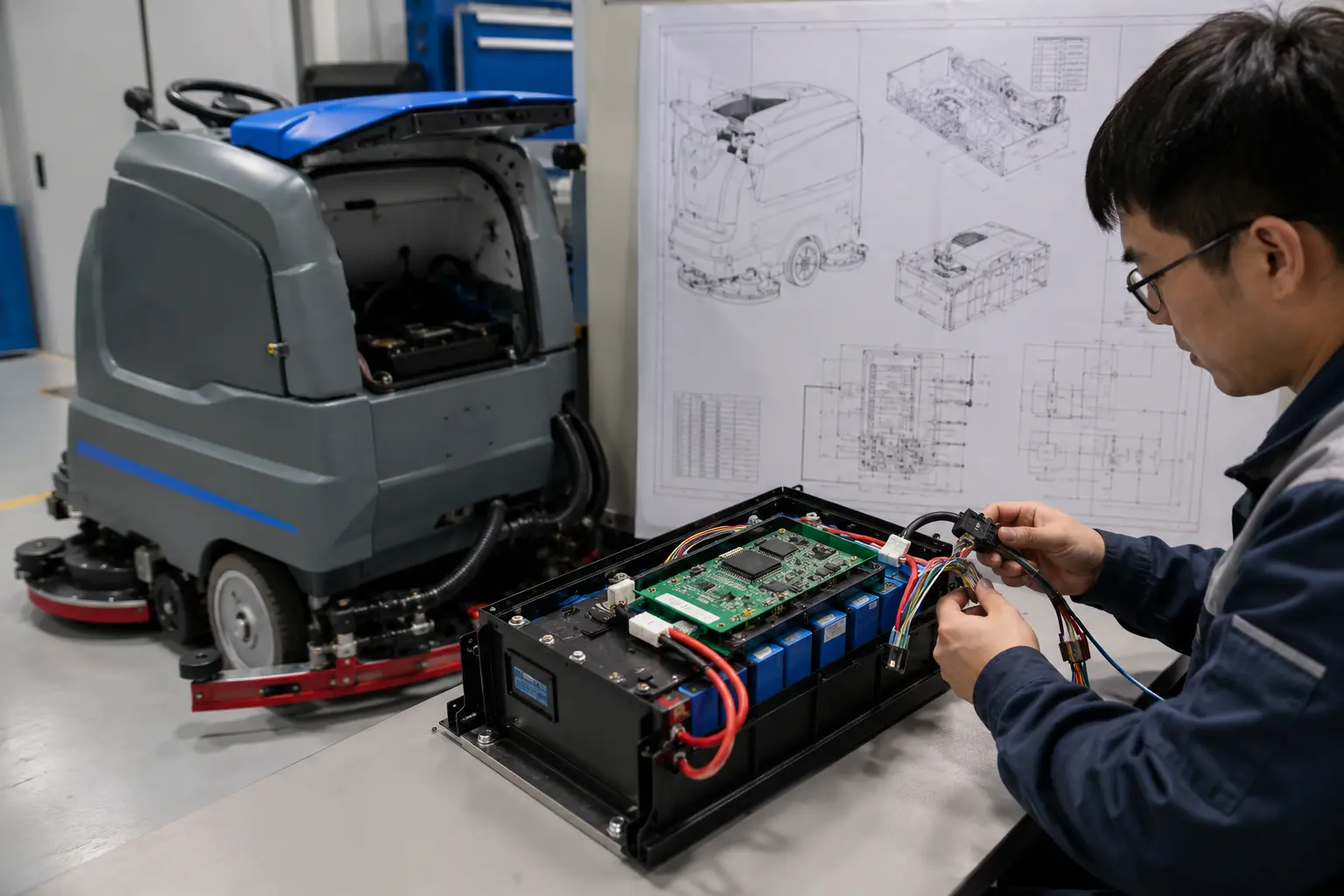
Need a Custom LiFePO4 Battery Pack for Floor Cleaning Machines?
Chalongfly supports OEM/ODM LiFePO4 battery pack development for floor scrubbers, sweepers, and industrial cleaning equipment. We can assist with voltage and capacity selection, BMS configuration, enclosure design, wiring harness integration, connector layout, charger matching, and sample-to-mass production support.
- Custom 24V / 36V / 48V LiFePO4 battery packs
- BMS protection and communication options
- Battery wiring harness and connector integration
- Steel or plastic enclosure design based on equipment structure
- OEM/ODM support for cleaning equipment manufacturers
FAQ: LiFePO4 Batteries for Floor Scrubbers
Are LiFePO4 batteries better than lead-acid batteries for floor scrubbers?
In many commercial and industrial cleaning applications, LiFePO4 batteries are better because they offer longer service life, lower maintenance, faster charging potential, lighter weight, and more stable power output. Lead-acid may still be used when the project is very cost-sensitive or the machine is used only occasionally.
Can a lead-acid floor scrubber be upgraded to a LiFePO4 battery pack?
Yes, but the upgrade must be checked carefully. The battery voltage, capacity, physical size, charger compatibility, discharge current, connector layout, and BMS protection settings must match the machine. For OEM projects, a custom LiFePO4 battery pack is usually recommended.
What voltage is commonly used for floor scrubber lithium batteries?
Many floor cleaning machines use 24V, 36V, or 48V battery systems, depending on machine size, motor power, and runtime requirements. The final voltage and capacity should be selected according to the equipment platform and operating conditions.
Do LiFePO4 floor scrubber batteries need a special charger?
Yes, LiFePO4 batteries should use a charger with a suitable lithium charging profile and correct voltage range. The charger connector, charge current, and communication requirements should also be confirmed during battery pack design.
Can Chalongfly customize the battery wiring harness and connectors?
Yes. Chalongfly can support battery wiring harnesses, power connectors, signal connectors, charging cables, and communication interface integration for custom LiFePO4 battery packs used in industrial cleaning machines.