


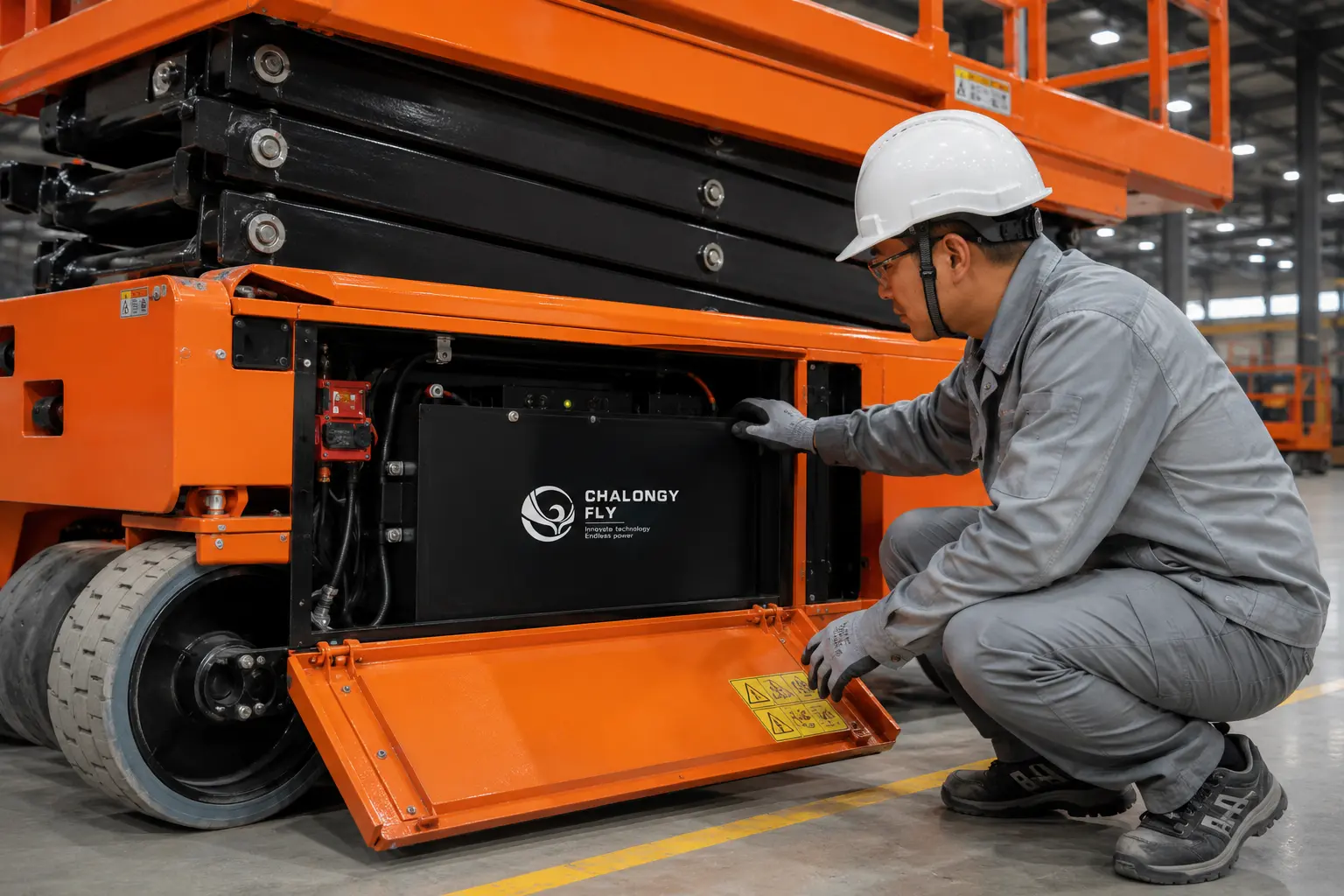
Lead-Acid Replacement Battery Guide for Scissor Lifts & AWPs
Upgrading your aerial work platforms from traditional flooded lead-acid or AGM batteries to LiFePO4 systems improves runtime, eliminates daily maintenance, and slashes equipment downtime. Explore our comprehensive engineering guide to a seamless lithium upgrade.
The Inevitable Shift from Lead-Acid to Lithium in Aerial Equipment
For decades, deep-cycle lead-acid batteries have been the default power source for scissor lifts, articulating boom lifts, and vertical mast lifts. However, fleet operators and equipment rental companies face persistent pain points: 8 to 10-hour charging times, mandatory watering schedules, and significantly reduced lifespans if opportunity charging is applied.
By upgrading to a smart, drop-in aerial work platform battery powered by LiFePO4 chemistry, you eliminate these bottlenecks. A lead-acid replacement battery for scissor lifts offers up to 10 times the cycle life, accepts rapid opportunity charging during shift breaks without damage, and maintains a stable voltage curve, ensuring the hydraulic pumps operate at maximum efficiency even at 10% capacity.
Lead-Acid vs. LiFePO4: Understanding the ROI
While the initial cost of an aerial work platform lithium battery upgrade is higher than purchasing a set of AGM or flooded batteries, the Total Cost of Ownership (TCO) drops dramatically over a 3 to 5 year period for heavy-duty industrial equipment.
| Performance Metric | Traditional Lead-Acid / AGM | Chalongfly LiFePO4 System |
|---|---|---|
| Daily Maintenance | Requires regular watering & terminal cleaning | 100% Maintenance-free (Closed system) |
| Charging Time | 8–10 hours (Requires cool-down period) | 2–4 hours (Supports rapid fast-charging) |
| Opportunity Charging | Damages battery (Causes sulfation & memory effect) | Fully supported (Charge during breaks) |
| Cycle Life | 300–500 cycles | 3,500+ cycles @ 80% DOD |
| Voltage Stability | Voltage drops significantly under heavy lifting load | Flat discharge curve; consistent lifting power |
| Usable Capacity | Only 50% capacity usable without damaging cells | Up to 100% capacity safely utilizable |
Technical Challenges When Executing a Lithium Battery Upgrade
A successful replacement is not simply dropping a new battery box into the scissor lift. As an experienced OEM/ODM battery manufacturer, Chalongfly meticulously engineers the replacement packs to overcome the mechanical and electrical hurdles inherent to AWPs.
1. Weight and Ballast Requirements
Lithium is significantly lighter than lead-acid. Because AWPs rely on the heavy battery weight as a counterweight for stability, removing lead-acid batteries can affect the machine's center of gravity. We design custom steel cases with integrated ballast to match the original weight.
2. Peak Discharge for Hydraulic Pumps
Scissor lifts require massive bursts of energy when lifting heavy payloads. If the BMS is not calibrated correctly, these spikes will trigger overcurrent protection and shut down the machine. Our BMS is engineered to handle extreme peak currents safely.
3. Cold Weather Operation
Standard lithium batteries cannot be charged below freezing temperatures. For outdoor construction equipment, we integrate internal heating pads managed by the BMS, allowing the battery to warm itself up before accepting a charge in winter conditions.
Battery Wiring Harness & BMS Integration
Industrial aerial equipment operates in high-vibration environments and draws significant current. When upgrading to lithium, the connection interfaces cannot be an afterthought. Poor wiring leads to resistance, heat, and eventual system failure.
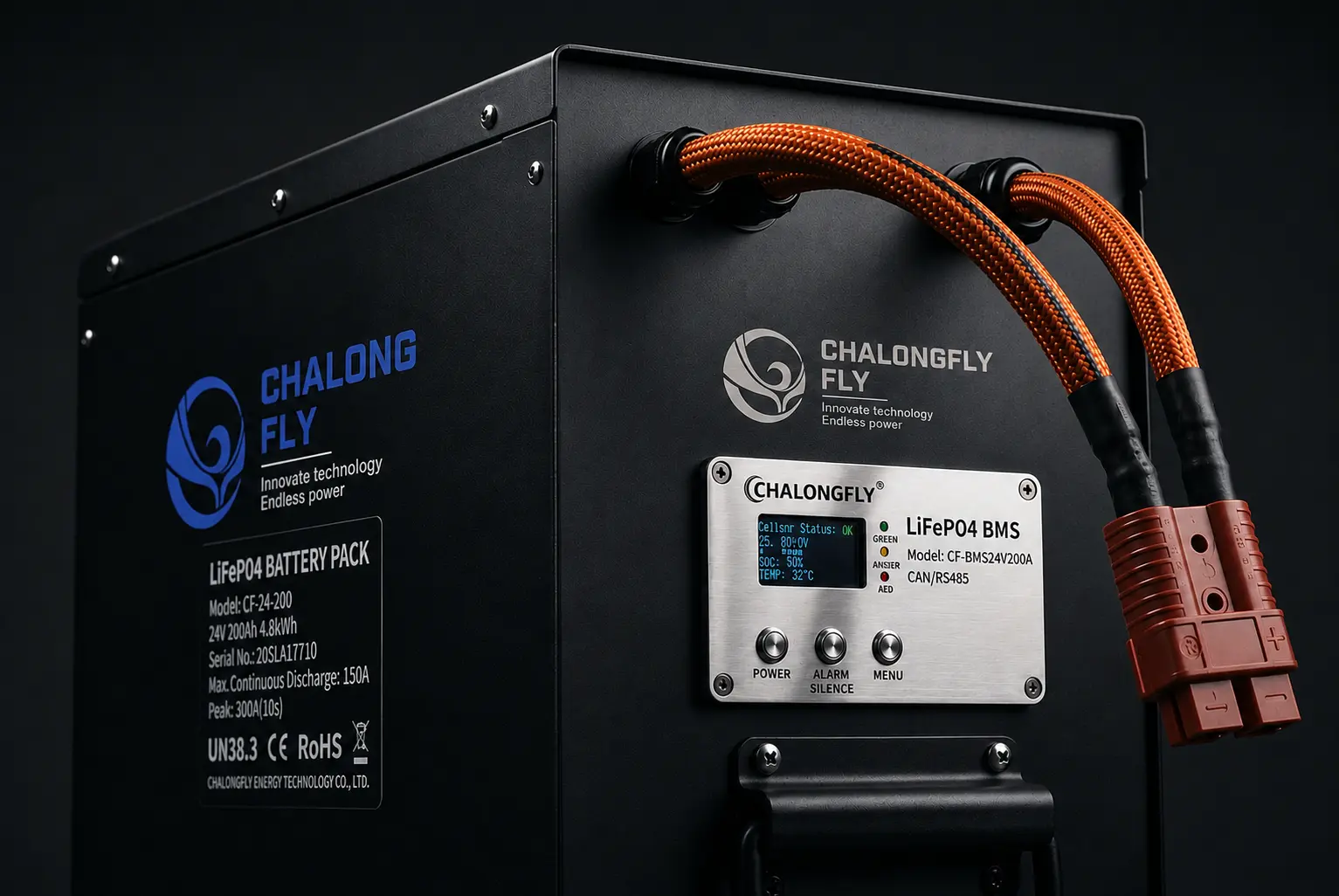
At Chalongfly, our scissor lift battery replacement solutions focus heavily on custom wiring harness integration. We design tailored heavy-duty power cables and integrate industrial-grade connectors (like Anderson or REMA) to ensure a seamless "drop-in" installation for any motive power battery upgrade.
OEM Integration Capabilities:
- High-current pure copper cable assemblies with strain relief.
- CANBus (J1939/CANOpen) and RS485 communication protocols.
- Real-time State of Charge (SOC) transmission to the dashboard.
- IP67-rated enclosures for dust and water resistance.
Explore Our Full Range of AWP Solutions
Ready to take your fleet to the next level? Explore our dedicated LiFePO4 solutions for Aerial Work Platforms to see how we customize voltage, capacity, and form factor specifically for boom lifts, scissor lifts, and telehandlers.
Frequently Asked Questions About AWP Lithium Upgrades
No, it is highly recommended to use a dedicated lithium battery charger. Lead-acid chargers have different charging stages (like desulfation and float charging) which can damage the LiFePO4 cells or trigger the BMS over-voltage protection, preventing the battery from reaching a full 100% charge.
In most cases, no. Custom LiFePO4 replacement packs are designed to fit the exact existing footprint of the lead-acid battery banks (like Group 27, GC2, or GC8 sizes). The new steel enclosure will utilize the same mounting points, ensuring a seamless "drop-in" installation.
Unlike lead-acid batteries that require a full 8-hour charge cycle to prevent battery degradation (sulfation), LiFePO4 batteries have no "memory effect." Operators can plug in the scissor lift during a 30-minute lunch break or shift change to add capacity without damaging the battery's overall lifespan.
Yes. For modern AWPs, our Battery Management Systems can be programmed to support CANBus or RS485 communication protocols. This allows the battery to send real-time data—such as accurate SOC, voltage, temperature, and fault alerts—directly to the machine's onboard computer and dashboard display.
Absolutely. LiFePO4 (Lithium Iron Phosphate) is the safest lithium chemistry available, with excellent thermal stability. Furthermore, unlike flooded lead-acid batteries, they do not emit harmful hydrogen gas during charging, eliminating the need for specialized, heavily ventilated charging rooms in your warehouse.