

Battery Pack Manufacturing Process: Prototype, Pilot Build & Mass Production
A custom battery pack should not move directly from a quotation to mass production. A controlled OEM process uses the prototype to prove the product, the pilot build to prove repeatable manufacturing, and the production release to lock the approved design, process controls, test criteria and traceability.
Prototype proves the product; pilot build proves the process
The prototype answers “does the battery work in the intended system?” The pilot build then answers “can this approved design be built repeatedly with controlled materials, assembly steps, inspections, firmware, testing and traceability?” Mass production should begin only after both questions have evidence-based answers and the production baseline is released.
From OEM requirements to a controlled production release
The exact sequence varies by application, but a disciplined custom battery project normally passes through clear engineering and manufacturing gates rather than treating sample approval as permission to immediately scale.
| Stage | Main purpose | Typical evidence before release |
|---|---|---|
| 1. Requirements baseline | Translate the OEM RFQ into agreed electrical, mechanical, BMS, communication, charger and environmental requirements. | Approved requirements, assumptions, drawings, interface data and acceptance criteria. |
| 2. Engineering design | Define cell configuration, BMS, current path, enclosure, harness, connectors, thermal strategy and firmware logic. | Design review records, preliminary BOM, drawings and interface definitions. |
| 3. Prototype build | Build one or a small number of samples to prove the architecture and integration. | Prototype configuration record and initial functional test results. |
| 4. Prototype validation | Confirm real-equipment performance and identify design corrections before scaling. | Electrical, BMS, communication, fit, charger, thermal and application validation data. |
| 5. Pilot build | Build a controlled small batch using intended production methods to expose process variation. | Work instructions, tooling, inspection plan, pilot yield and end-of-line test data. |
| 6. Production baseline | Freeze approved design and process versions for controlled manufacturing. | Released BOM, drawings, firmware, harness specs, test criteria and traceability rules. |
| 7. Mass production | Run repeatable production with incoming, in-process and final controls. | Batch records, serial traceability, inspection results, EOL test records and change control. |
The first build is for engineering learning, not production proof
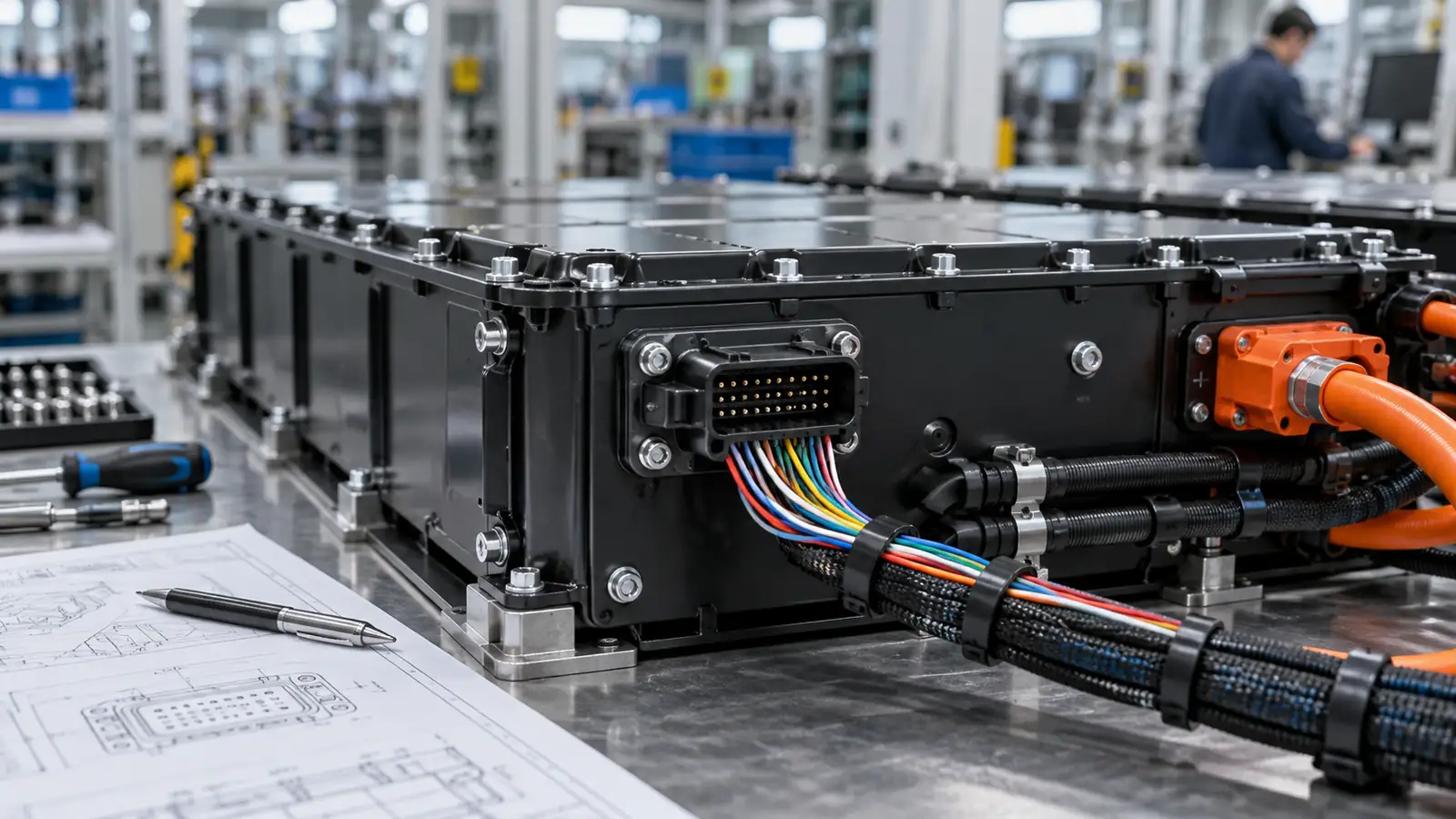
A prototype should represent the intended battery architecture closely enough to validate the interfaces and operating behavior, while still allowing controlled design changes before the project becomes expensive to modify.
Electrical architecture
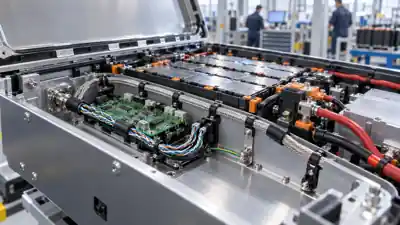
Verify cell configuration, usable voltage range, current path, protection devices, BMS settings and charger compatibility against the agreed load profile.
- Nominal and operating voltage
- Continuous and peak current
- Charge current and cutoff behavior
- Fuse, contactor or pre-charge logic where applicable
System integration
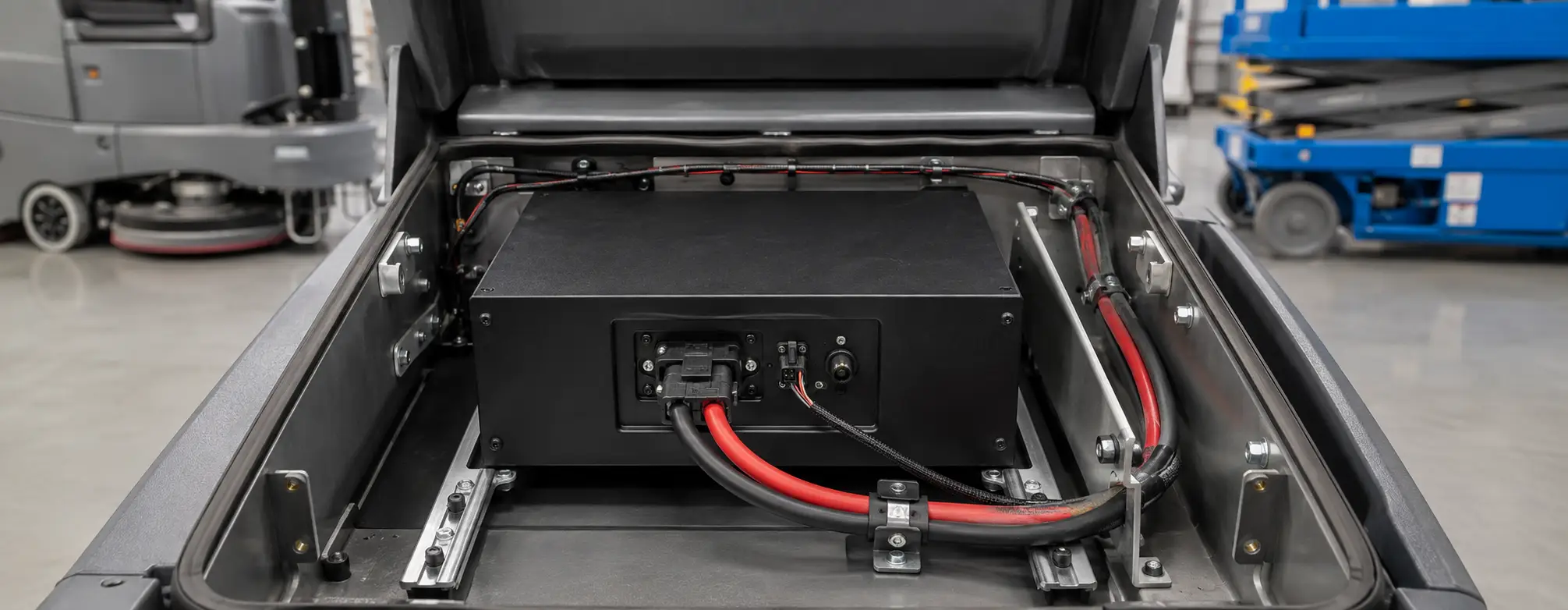
Confirm that the pack physically fits, connects, communicates and can be installed and serviced as intended in the OEM equipment.
- Enclosure dimensions and mounting
- Connector access and cable exit
- CAN / RS485 interface
- Charger and equipment-side harness
Validate the sample against measurable OEM acceptance criteria
Prototype approval should be based on evidence, not only on whether the battery powers the equipment for a short demonstration. The validation plan should reflect the actual application and the risks identified during design.


For an application-specific example, review how OEMs can validate LiFePO4 batteries in floor scrubbers before production.
A small batch should prove repeatability, not just produce more samples
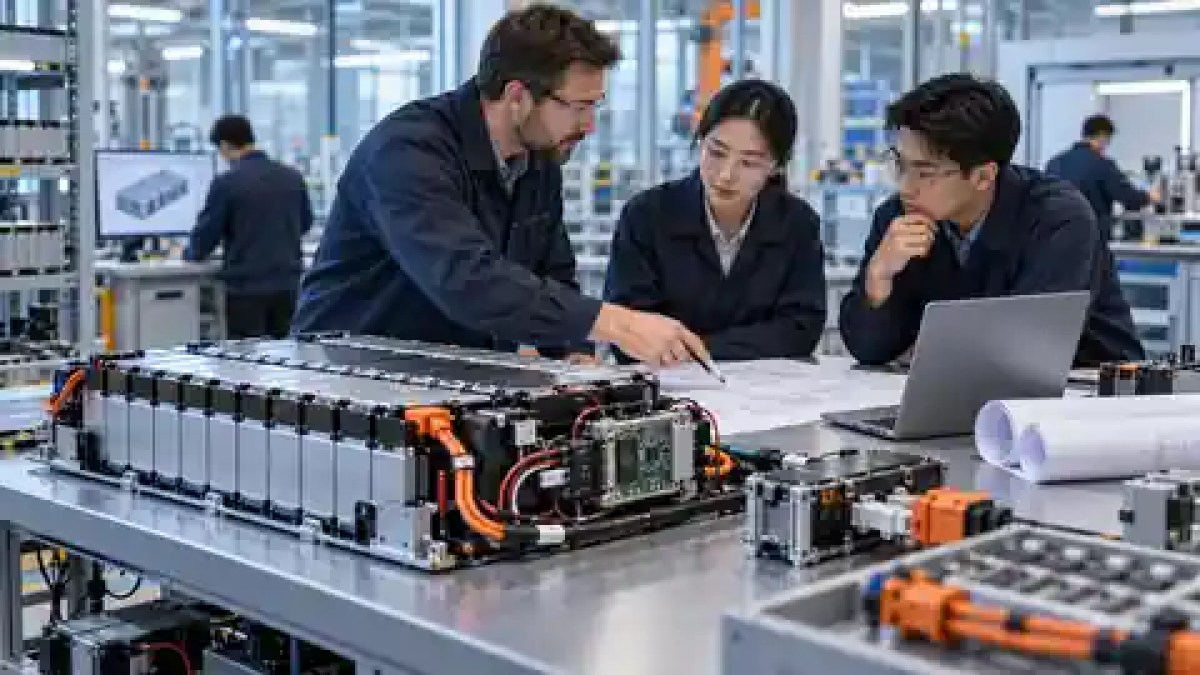
The pilot build moves the project from engineering confidence toward manufacturing confidence. The goal is to use intended production materials and methods, observe variation, refine work instructions and confirm that inspection and end-of-line tests can identify defects consistently.
What should be production-like?
- Approved cell, BMS and key component sources
- Released or near-released enclosure and harness drawings
- Intended connector, cable and hardware specifications
- Production tooling, fixtures and torque controls where applicable
- Firmware loading and configuration method
What should the pilot reveal?
- Assembly steps that are difficult or ambiguous
- Cable routing and service-access variation
- Process points that need measurement or poka-yoke
- Inspection criteria that are not repeatable
- Yield, rework causes and end-of-line failure modes
Freeze the versions that define what “approved product” means
Before mass production, the OEM and battery supplier should be able to identify exactly which design and process versions are approved. A controlled baseline prevents silent substitutions and makes later engineering changes traceable.
Repeatability depends on controlling materials, process, testing and records
Once the production baseline is released, manufacturing quality is less about repeating prototype engineering and more about keeping every batch within the approved configuration and detecting variation before shipment.
Incoming material control
Critical cells, BMS components, connectors, cables, protection devices, enclosure parts and other controlled materials should be checked against approved specifications and traceable lot information.
In-process inspection
Critical operations may include polarity verification, busbar and cable assembly, torque control, insulation, harness routing, connector pinout, firmware programming, sealing and mechanical fit checks.
End-of-line testing
The EOL test should confirm the functions that can be verified efficiently on every pack or defined sampling basis, such as voltage, communication, protection logic, insulation, charging or functional output as appropriate.
Traceability and records
Serial numbers, batch data, key material lots, firmware version, test results and nonconformance or rework records allow a production issue to be traced to the affected configuration instead of the entire product history.
Six ways a custom battery project can fail between sample and volume production
Build a complete requirements-to-production workflow
This manufacturing guide sits between the RFQ/design stage and the final quality-control stage of a custom battery project.
Custom battery manufacturing questions from OEM teams
What is the difference between a prototype build and a pilot build for a custom battery pack?
A prototype build is used to prove the battery architecture, interfaces and application performance. A pilot build uses a small controlled batch to prove that the design can be manufactured repeatedly with the intended materials, work instructions, tooling, inspection points and end-of-line tests.
What should be validated before a custom battery pack enters pilot production?
The prototype should meet agreed electrical performance, BMS protection and communication requirements, mechanical fit, connector and charger compatibility, thermal behavior, service access and application-level acceptance criteria before the project moves to pilot production.
When should the battery pack BOM, drawings and BMS firmware be frozen?
The production baseline should be frozen after prototype corrections are completed and before or during the pilot-build release. The frozen baseline should identify approved cells, BMS hardware and firmware, enclosure drawings, connector and harness specifications, charger interface and test criteria.
Why is a pilot build necessary before mass production?
A pilot build exposes manufacturing risks that may not appear in one or two prototypes, such as assembly variation, torque control, cable routing, connector access, firmware loading, inspection repeatability, traceability and end-of-line test consistency.
What records should be controlled for custom battery pack mass production?
Typical controlled records include approved BOM and drawings, work instructions, inspection criteria, BMS and firmware versions, incoming-material records, process inspection data, end-of-line test results, serial-number traceability and approved engineering-change records.
Can a component be changed after the battery pack enters mass production?
Yes, but a production component should not be changed informally. Any substitution that can affect electrical, mechanical, thermal, communication, compliance or reliability performance should go through documented engineering-change review and, where necessary, revalidation before release.
Preparing to move a custom battery from prototype to production?
Send the approved application requirements, prototype results, open design issues, expected volume, drawings, BMS and communication requirements, connector and charger information, and target production timeline. Chalong Fly can review the engineering baseline and identify the items that should be controlled before pilot and mass-production release.
Blog Information
Latest insights from CLF: battery technology, energy storage, and industry updates.