


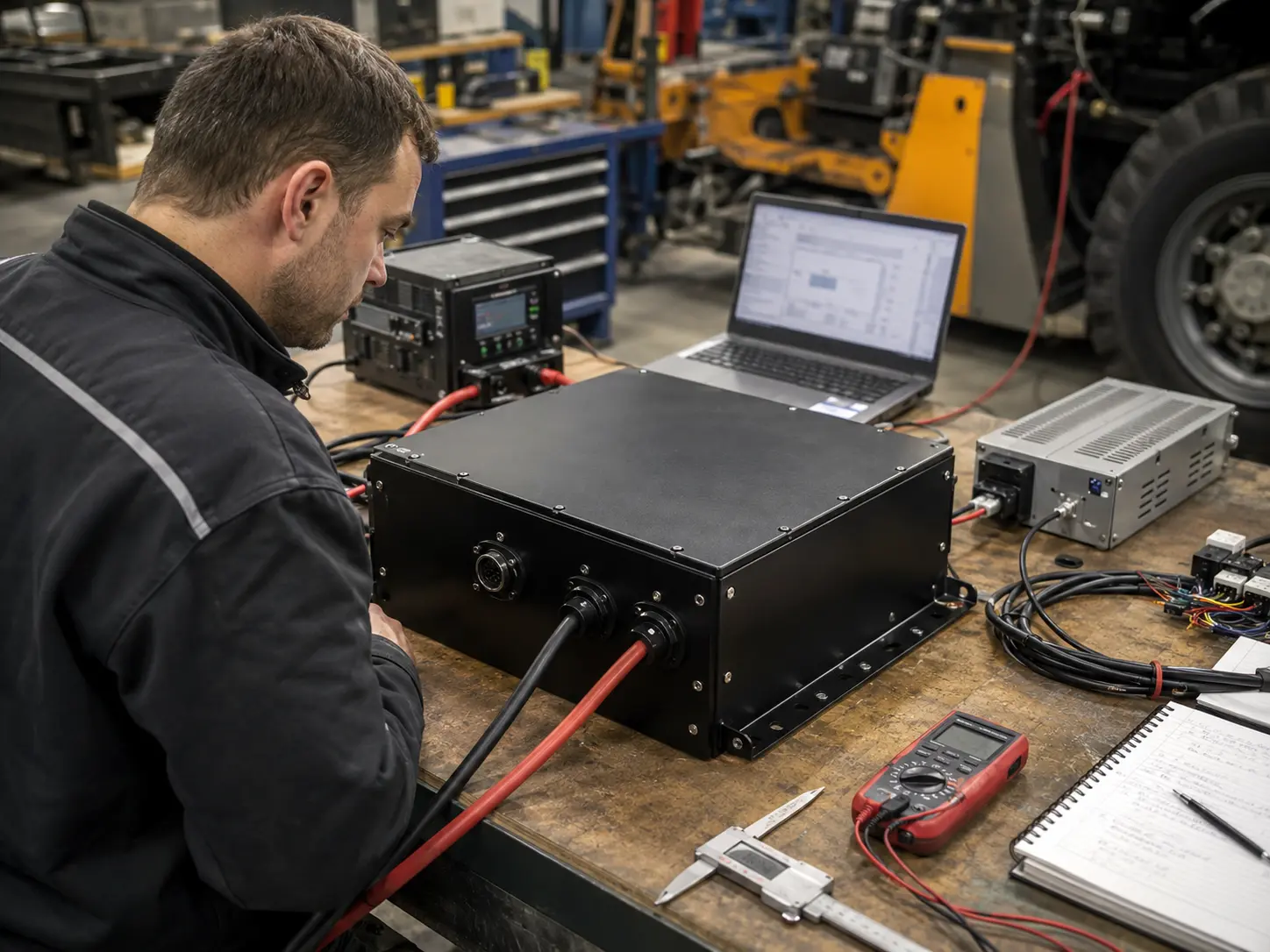
48V LiFePO4 Battery Pack Design for Industrial Equipment Voltage, BMS, Connectors and OEM Integration
A 48V LiFePO4 battery pack for industrial equipment must be designed as a complete power system. OEMs need to confirm voltage range, load current, BMS protection logic, charger matching, connector layout, cable routing, enclosure structure, and validation testing before moving from sample to production.
Why 48V LiFePO4 Battery Packs Are Widely Used in Industrial Equipment
A 48V battery platform is widely used in industrial equipment because it can support higher power demand than lower-voltage systems while still remaining practical for compact battery pack design, service access, and OEM equipment integration. For many machines, 48V is a balanced platform for drive motors, lift systems, pumps, controllers, and auxiliary electronics.
In real projects, however, a 48V LiFePO4 battery pack is not selected only by nominal voltage and Ah capacity. The final design depends on continuous discharge current, peak current, working hours, battery compartment size, charger requirements, connector layout, communication needs, thermal behavior, vibration environment, and the machine’s operating profile.
CLF Battery supports custom motive power battery solutions for industrial equipment, including battery packs for floor cleaning machines, aerial work platforms, and low-speed electric vehicles.
Key Design Factors for a 48V LiFePO4 Battery Pack
The right battery design depends on how the equipment is used in real operation. A floor scrubber, scissor lift, AGV, utility vehicle, and industrial cart may all use a 48V platform, but their current curves and installation requirements can be very different.
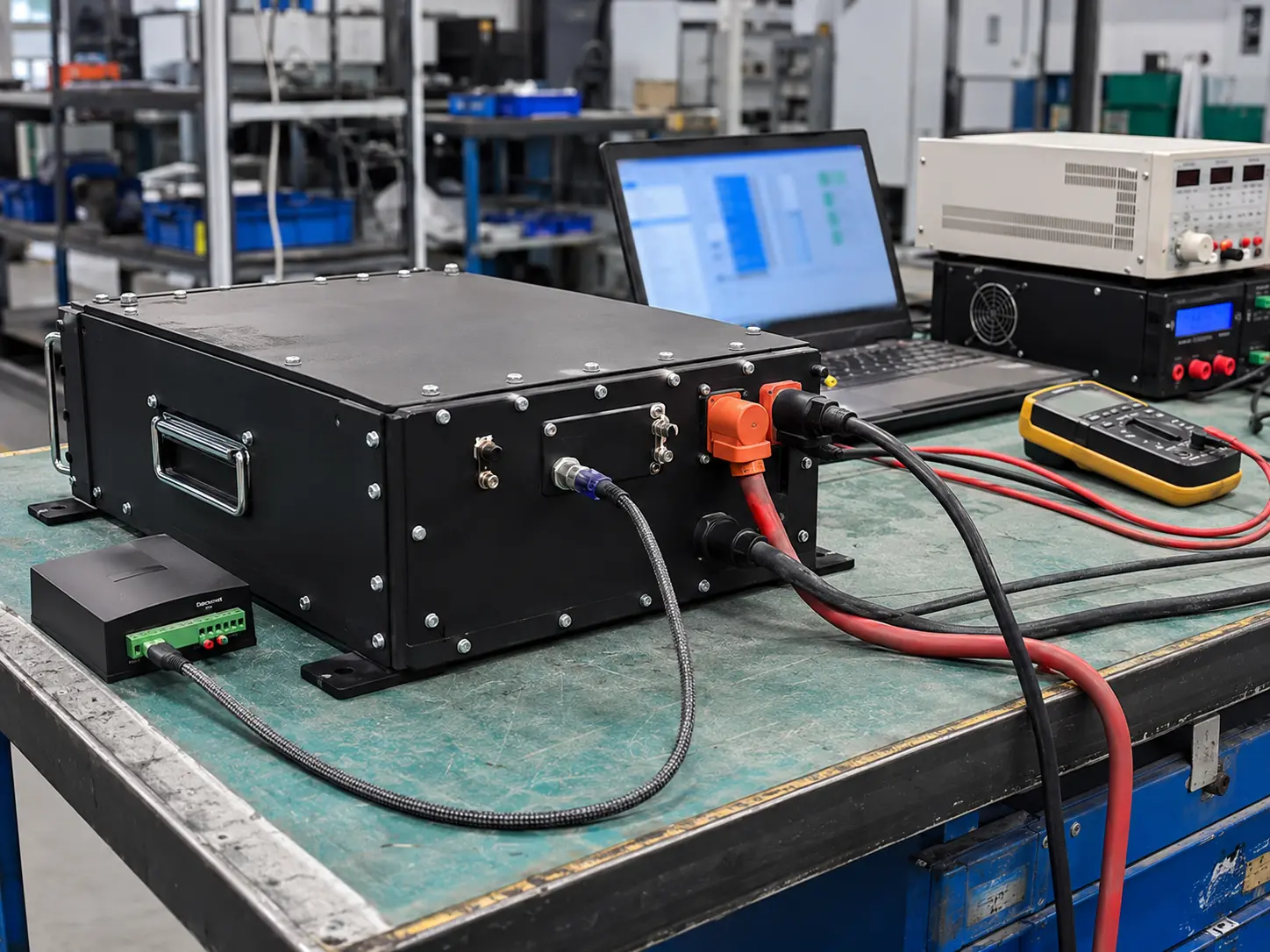
BMS and Charger Matching Are Central to Reliability
For a 48V LiFePO4 battery pack, the BMS must be selected according to the real equipment load profile. Continuous current, peak current, starting current, slope load, motor acceleration, lift operation, and overload conditions should be reviewed before confirming the BMS rating.
Charger matching is equally important. The charger must use a suitable lithium charging profile, correct voltage range, appropriate charge current, and compatible connector interface. If the charger is not matched correctly, battery life, charging safety, and field reliability may be affected.
48V Battery Pack Design Matrix for OEM Projects
OEM battery projects should evaluate both electrical and mechanical integration. The table below summarizes the key design items that should be reviewed before confirming a 48V LiFePO4 battery pack.
| Design Item | What OEMs Should Confirm | Why It Matters | CLF Battery Support |
|---|---|---|---|
| Voltage Platform | 48V / Custom Nominal voltage, operating voltage range, and controller compatibility. |
Incorrect voltage may affect motors, controllers, chargers, and safety circuits. | Custom voltage and capacity configuration based on machine platform. |
| Capacity and Runtime | Required Ah or kWh, working hours, duty cycle, and usable energy target. | Capacity should match real operating time instead of only theoretical calculation. | Runtime estimation and cell configuration support for OEM equipment. |
| BMS Current Rating | Continuous discharge current, peak current, charge current, and overload conditions. | Wrong BMS rating may cause shutdown, poor performance, or protection failures. | BMS selection and parameter configuration matched to equipment load profile. |
| Charger Matching | Charge voltage, charge current, lithium charging profile, connector, and charging environment. | Charging mismatch can shorten battery life or create safety risks. | Charger compatibility review and lithium charging profile confirmation. |
| Connector Layout | Power output, charging port, signal connector, communication line, and service access. | Connector layout affects installation, maintenance, and long-term reliability. | Power connector, signal connector, and cable outlet design support. |
| Wiring Harness | Power cable size, signal wiring, BMS lines, fuse, contactor, and communication interface. | Clean wiring harness design improves assembly, service, and system stability. | Harness integration Battery wiring harness and cable assembly support. |
| Enclosure Structure | Steel or plastic case, mounting holes, handles, insulation, sealing, and cable outlet direction. | The enclosure must fit the battery compartment and withstand industrial operation. | Custom enclosure design based on 2D/3D drawings or compartment dimensions. |
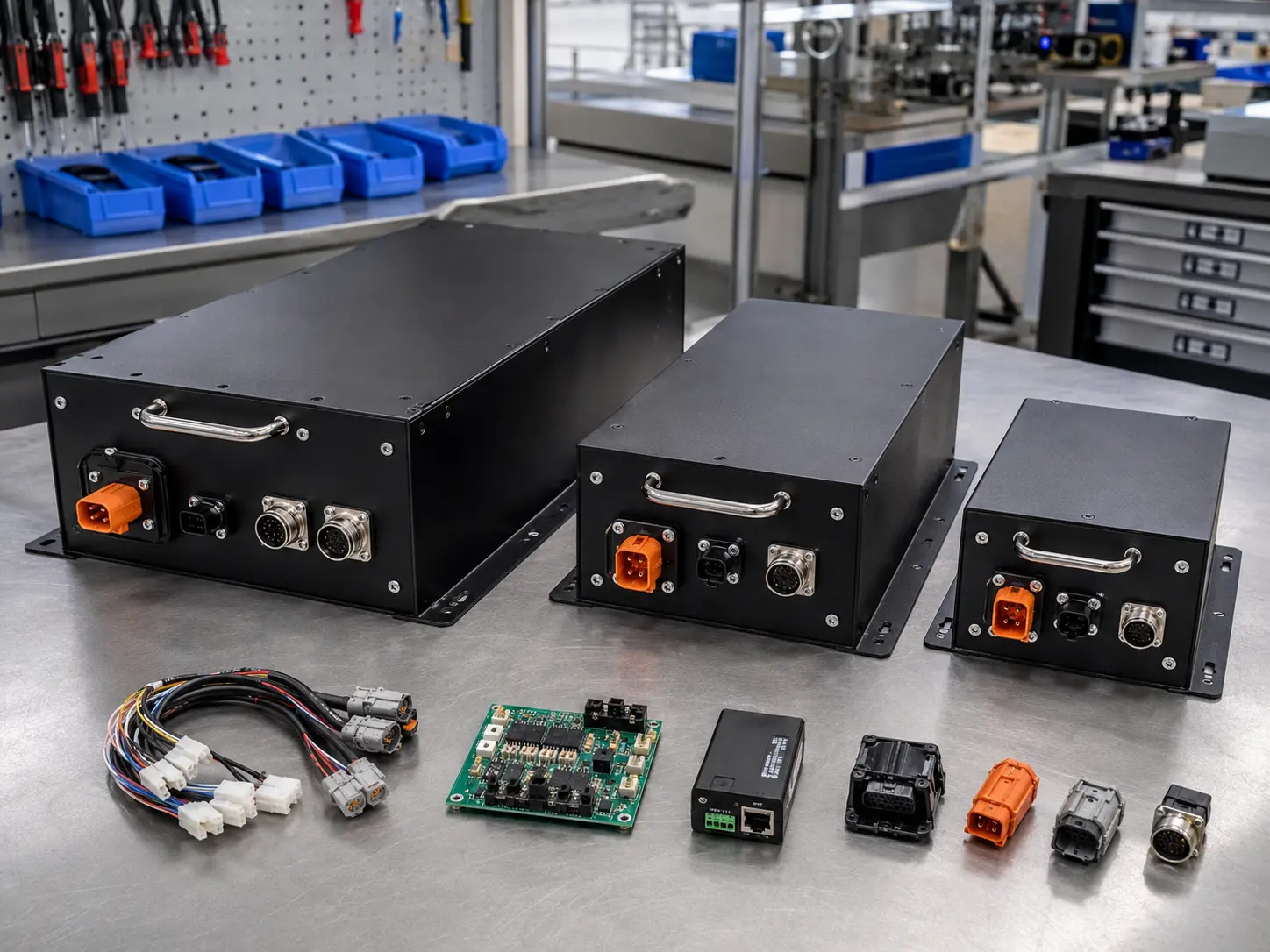
Connector, Harness, and Enclosure Design Should Be Planned Together
Many battery pack problems appear not because of the cells, but because of poor integration details. Connector selection, cable bending radius, cable outlet direction, strain relief, BMS access, charging interface, and service replacement method should be confirmed before the enclosure is finalized.
CLF Battery can support related battery wiring harness and custom cable assembly development for OEM equipment projects.
Recommended OEM Development Workflow
A 48V LiFePO4 battery pack should move from requirements confirmation to sample testing before mass production. This workflow helps reduce design risk and prevents problems such as wrong connector location, charger mismatch, insufficient BMS current rating, and difficult field installation.
Confirm Equipment Platform
Review application type, system voltage, motor load, controller behavior, operating environment, and expected runtime.
Define Battery Pack Requirements
Confirm capacity, current rating, battery compartment size, fixing method, cable outlet direction, and service access.
Select Cells, BMS, and Enclosure
Match cell configuration, BMS current rating, protection logic, thermal behavior, enclosure material, and internal layout.
Plan Charger, Connectors, and Harness
Confirm charging profile, power connector, signal connector, communication line, fuse, cable size, and strain relief.
Validate Sample and Prepare Production
Test fitment, charging, discharge, BMS protection, vibration, temperature, safety behavior, and field maintenance requirements.
Typical Applications for 48V LiFePO4 Battery Packs
48V LiFePO4 battery packs are suitable for industrial equipment that requires stable power output, reduced maintenance, and a compact high-efficiency battery system. Typical applications include:
- Floor scrubbers, sweepers, and commercial cleaning machines
- Aerial work platforms, scissor lifts, and mobile elevated work platforms
- AGVs, AMRs, industrial carts, and warehouse utility vehicles
- Low-speed electric vehicles and special-purpose industrial vehicles
- Battery-powered pumps, lifting systems, and mobile work equipment
- OEM machines requiring battery pack, charger, BMS, connector, and wiring harness integration
What Information Should OEMs Provide Before Requesting a Quote?
To design a reliable 48V LiFePO4 battery pack for industrial equipment, OEMs should provide the following information as early as possible.
Need a Custom 48V LiFePO4 Battery Pack for Industrial Equipment?
CLF Battery supports OEM/ODM 48V LiFePO4 battery pack development for industrial equipment. We can assist with voltage and capacity selection, BMS configuration, charger matching, enclosure design, connector layout, wiring harness integration, sample testing, and mass production support.
- Custom 48V LiFePO4 battery pack design
- BMS protection and communication options
- Battery wiring harness and connector integration
- Steel or plastic enclosure design based on equipment structure
- Charger matching and lithium charging profile confirmation
- OEM/ODM support from sample testing to mass production
FAQ: 48V LiFePO4 Battery Pack Design
48V is widely used because it provides a practical balance between power capability, system efficiency, compact battery design, charger availability, controller compatibility, and service safety for many industrial machines.
Capacity should be selected according to expected runtime, duty cycle, motor load, working hours, usable energy, battery compartment size, and charging schedule. OEMs should avoid selecting capacity only by nominal Ah.
The BMS current rating depends on continuous discharge current, peak current, starting current, motor load, overload conditions, charge current, and protection requirements. The final rating should be matched to the real machine load profile.
Yes. A 48V LiFePO4 battery pack should use a charger with the correct lithium charging profile, charge voltage, charge current, connector type, and safety settings. Charger matching should be confirmed during battery design.
Yes. CLF Battery can support power connectors, signal connectors, charging cables, CANBus or RS485 lines, battery wiring harnesses, cable outlet design, and complete connector integration for OEM battery pack projects.