


Best LiFePO4 Battery for Aerial Work Platforms and Scissor Lifts
For aerial work platforms, scissor lifts, and boom lifts, a battery pack must do more than provide basic capacity. OEMs need stable peak current, correct compartment fitment, safe charging logic, BMS protection, connector layout, and wiring harness integration.
Why Aerial Work Platforms Need Carefully Designed Lithium Battery Packs
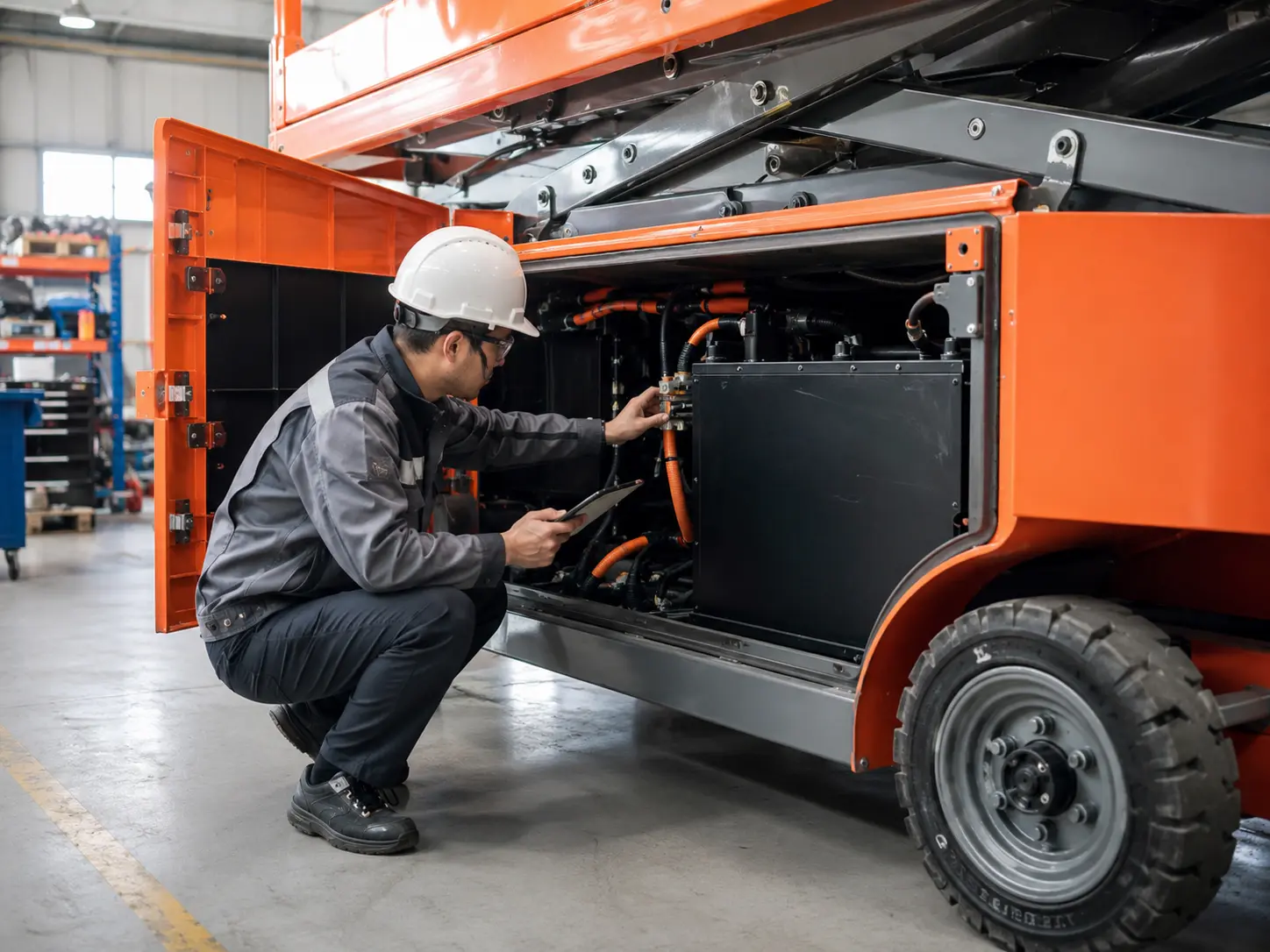
Aerial work platforms and scissor lifts operate under demanding load conditions. The battery system must support driving, lifting, lowering, steering, control electronics, and repeated stop-start operation. When the battery is not properly matched, the machine may suffer from voltage drop, protection shutdown, slow charging, short runtime, or poor service reliability.
For OEM equipment manufacturers, LiFePO4 is not just a lead-acid replacement. It should be designed as a complete power system with cells, BMS, charger matching, enclosure structure, cable outlet direction, high-current connectors, and signal wiring.
CLF Battery supports custom motive power battery solutions for industrial equipment, including dedicated LiFePO4 battery packs for aerial work platforms.
What Makes a Good LiFePO4 Battery for Scissor Lifts?
A good LiFePO4 battery for scissor lifts should provide enough usable energy for the expected working time, enough discharge capability for lifting and drive motors, and enough protection logic to prevent unsafe operating conditions. The design must also match the machine’s battery tray, cable outlet layout, and charger requirements.
Compared with lead-acid batteries, LiFePO4 battery packs can offer higher usable energy, faster maintenance cycles, lower routine service requirements, and better voltage consistency. However, the real value comes from system-level design: cells, BMS, charger, wiring harness, connectors, enclosure, mounting points, and service access all need to work together.
Battery Compartment Fitment Is a Critical Design Step
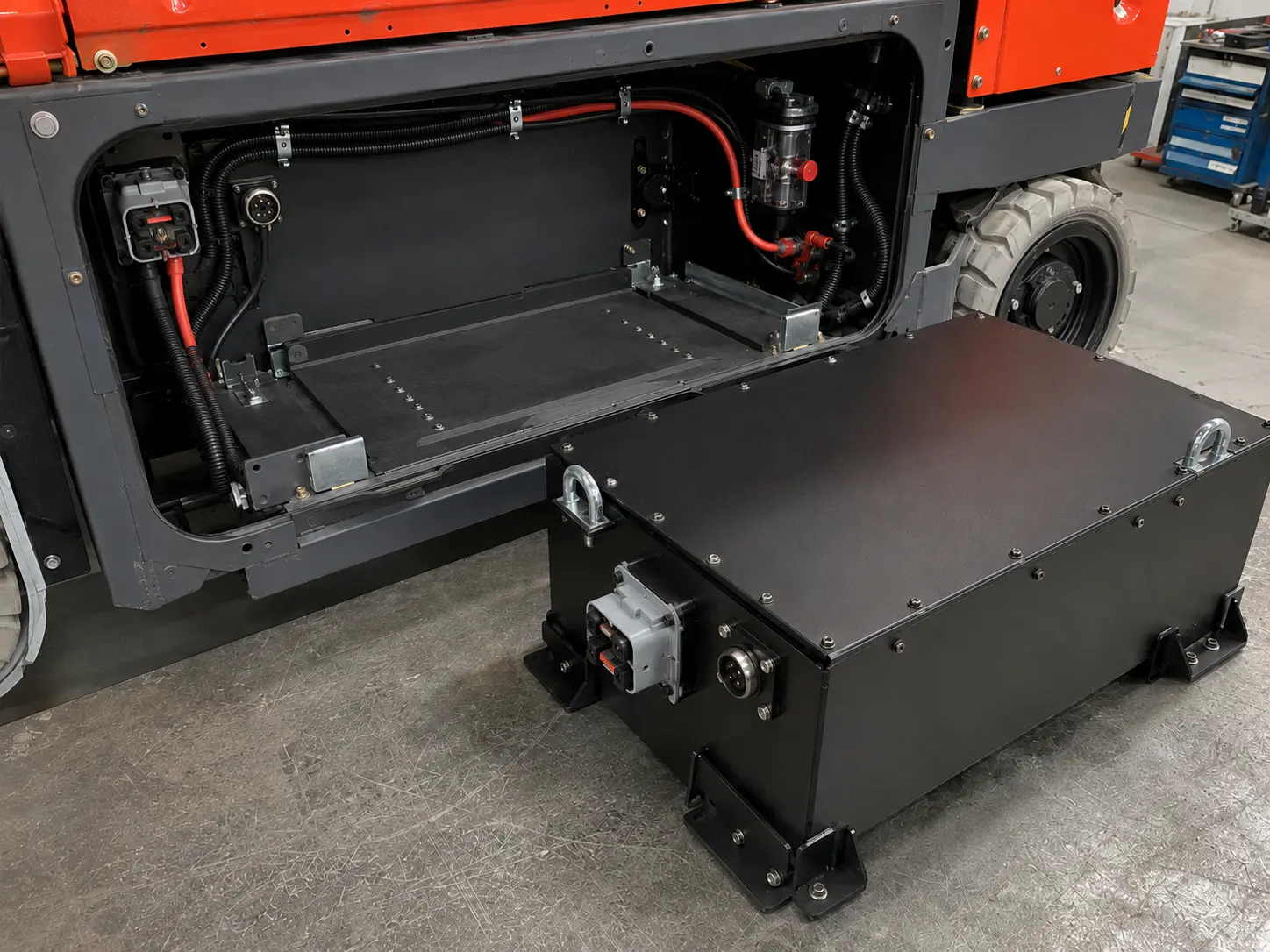
Aerial lifts and scissor lifts often have limited battery compartment space. The battery tray may include rails, mounting brackets, side covers, service panels, and connector clearance areas. If the lithium battery pack is not designed around these details, installation can become difficult even when the electrical specifications look correct.
Before development, OEMs should confirm battery length, width, height, fixing method, cable outlet direction, ventilation needs, maintenance access, and whether the battery must be removed from the front, side, or top.
AWP LiFePO4 Battery Design Matrix
The best battery design depends on how the machine works in real use. For scissor lifts, boom lifts, and other aerial work platforms, OEMs should review both electrical and mechanical integration factors before confirming a battery pack.
| Design Item | What OEMs Should Check | Why It Matters | CLF Battery Support |
|---|---|---|---|
| Voltage Platform | 24V / 48V / Custom Match the existing equipment power system. |
Incorrect voltage may affect controllers, motors, chargers, and safety systems. | Custom voltage and capacity configuration based on equipment platform. |
| Discharge Current | Confirm continuous current, peak current, lifting current, slope current, and starting current. | Insufficient current capability may trigger BMS protection or reduce machine performance. | BMS current rating and protection settings matched to machine load profile. |
| BMS Protection | Over-current, short-circuit, over-charge, over-discharge, temperature, and balancing logic. | The BMS protects the battery pack and helps prevent unsafe operation. | Custom BMS configuration with optional communication and fault reporting. |
| Charger Matching | Confirm charging voltage, charge current, lithium charging profile, and connector type. | Wrong charger settings may shorten battery life or create charging risk. | Support charger matching and lithium charging profile confirmation. |
| Wiring Harness | Power cable size, signal wiring, charging cable, communication line, and connector layout. | Clean harness design improves installation, service, and long-term reliability. | Harness integration Battery wiring harness and connector support. |
| Enclosure Design | Steel case, plastic case, handle, fixing points, insulation, label area, and cable outlet. | The enclosure must fit the machine and withstand industrial operating conditions. | Custom enclosure design based on battery compartment drawings. |
Lead-Acid Replacement vs OEM Lithium Battery Design
Some projects start as direct lead-acid replacement projects, while others are new OEM lithium battery platforms. The technical approach is different. A replacement project usually needs to stay close to existing dimensions, charger space, cable access, and service habits. A new platform allows more freedom in capacity, enclosure position, charger interface, and service structure.
| Project Type | Lead-Acid Replacement Focus | New OEM LiFePO4 Platform Focus | Recommendation |
|---|---|---|---|
| Battery Size | Match the existing battery tray and replacement space. | Design around best energy density and service access. | Provide battery compartment photos or drawings before design. |
| Voltage and Capacity | Usually follows the original lead-acid voltage platform. | Can be optimized according to runtime, load, and platform requirements. | Confirm motor power, lift current, drive current, and expected runtime. |
| BMS Logic | May need to work with existing machine controller behavior. | Can be matched to new equipment diagnostics and warning logic. | Set BMS parameters according to real machine operation. |
| Charging | Existing charger may need replacement or lithium profile confirmation. | Charger can be selected with the battery system. | Use a lithium-compatible charger and confirm current limit. |
| Connector and Harness | May need adapter cables or matching connectors. | Can be designed as a complete harness interface. | Improve service reliability with standardized power and signal connectors. |
BMS, Wiring Harness, and Connector Integration
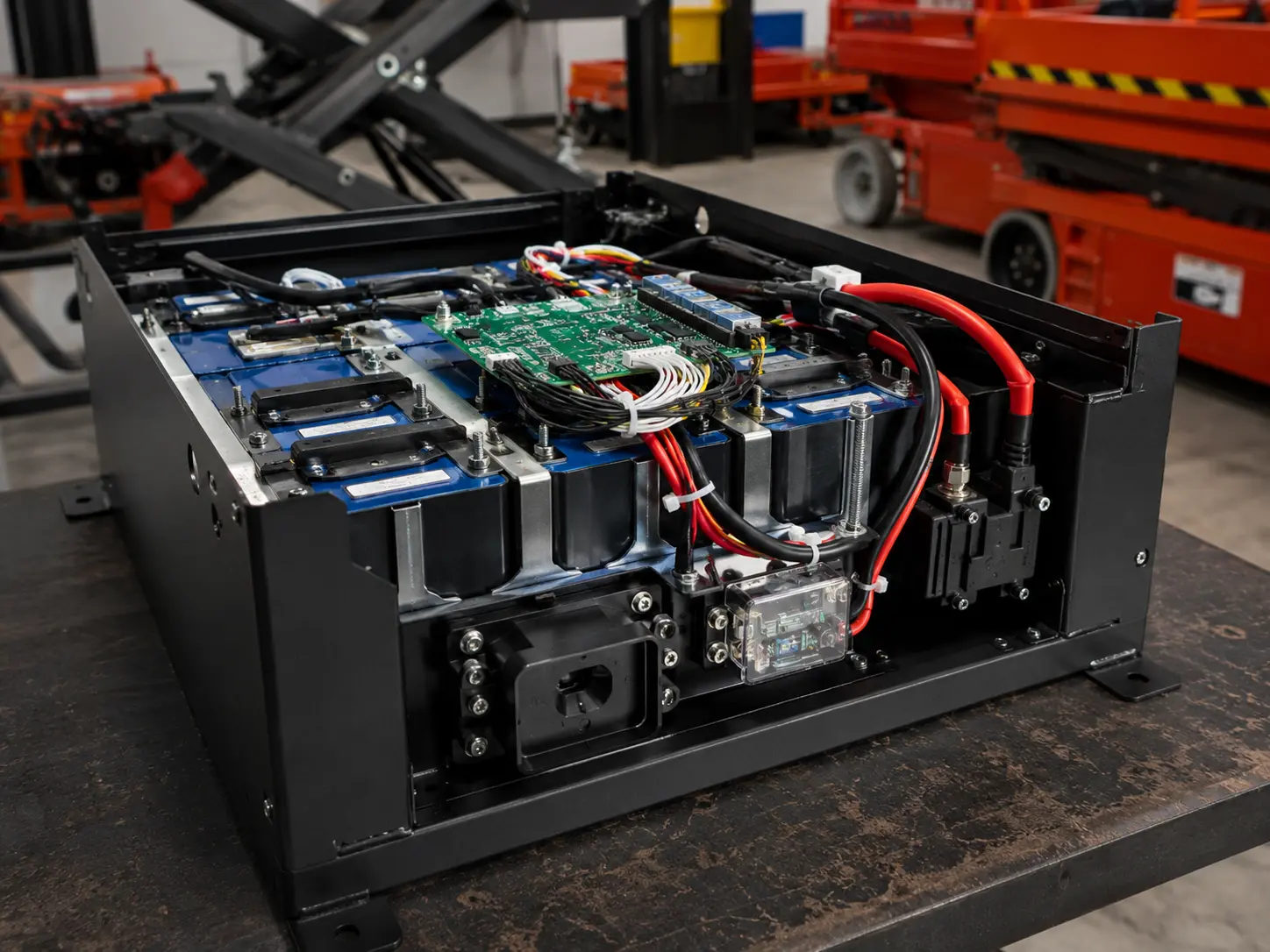
For aerial work platforms, BMS and wiring harness integration are central to battery reliability. The BMS should protect the battery from unsafe operating conditions, while the wiring harness must support stable current flow, clean signal transmission, and reliable connection during vibration and equipment operation.
CLF Battery can support custom power cable selection, BMS configuration, connector selection, and related battery wiring harness development for LiFePO4 battery packs used in industrial equipment.
Recommended OEM/ODM Development Process
A reliable LiFePO4 battery pack for aerial work platforms should follow an engineering development process instead of a simple price quotation. The steps below help reduce fitment, charging, installation, and service problems before mass production.
Confirm Machine Platform
Review equipment type, voltage system, motor load, lift system, drive current, controller behavior, and operating conditions.
Measure Battery Compartment
Confirm space, fixing points, cable outlet direction, connector position, and installation method.
Design Battery Pack and BMS
Select cells, capacity, BMS current rating, protection logic, communication requirements, enclosure, and internal layout.
Match Charger and Harness
Confirm charger voltage, charge current, lithium charging profile, power cable, signal cable, and connector interface.
Sample Test and Mass Production
Verify mechanical fitment, runtime, vibration, safety protection, charging, and field service requirements.
What Information Should OEMs Provide Before Requesting a Quote?
To design the best LiFePO4 battery pack for a scissor lift or aerial work platform, the following information should be provided as early as possible.
Best Applications for LiFePO4 Aerial Work Platform Batteries
LiFePO4 batteries are especially suitable for aerial work platforms where operators need reliable daily use, reduced maintenance, and predictable charging. Typical applications include:
- Electric scissor lifts used in warehouses and distribution centers
- Mobile elevated work platforms for facility maintenance
- Compact mast lifts used in indoor service environments
- Boom lifts used for work platforms requiring long maintenance intervals
- MEWP equipment platforms requiring custom lithium battery integration
- Industrial vehicles that require battery pack, BMS, connector, and harness integration
For equipment manufacturers, a properly designed LiFePO4 battery pack can improve product competitiveness by reducing service burden, improving charging convenience, and supporting more stable machine performance.
Need a Custom LiFePO4 Battery Pack for Aerial Work Platforms?
CLF Battery supports OEM/ODM LiFePO4 battery pack development for aerial work platforms, scissor lifts, mobile elevating work platforms, and industrial equipment. We can assist with voltage and capacity selection, BMS configuration, enclosure design, wiring harness integration, connector layout, charger matching, sample testing, and production support.
- Custom 24V / 48V LiFePO4 battery packs
- BMS protection and communication configuration
- Battery wiring harness and connector integration
- Steel or plastic enclosure design based on equipment structure
- OEM/ODM support for industrial equipment manufacturers
- Sample-to-mass-production project support
FAQ: LiFePO4 Batteries for Aerial Work Platforms
For many electric aerial work platforms and scissor lifts, LiFePO4 batteries are a strong choice because they offer long cycle life, low maintenance, stable power output, and better charging flexibility. The best battery depends on voltage, capacity, current rating, battery compartment size, charger matching, and BMS requirements.
Yes, but the upgrade must be evaluated carefully. The lithium battery pack should match the original voltage platform, current demand, compartment size, connector layout, charger requirements, and machine-side controller behavior.
Many scissor lifts use 24V or 48V systems, depending on machine size, lift motor power, and drive motor requirements. Some OEM platforms may require customized voltage and capacity.
Yes. LiFePO4 batteries should use a lithium-compatible charger with the correct charging voltage, charging current, connector type, and charging profile. Charger matching should be confirmed during battery pack design.
Yes. CLF Battery can support BMS configuration, power connectors, signal connectors, charging cables, battery wiring harnesses, and communication interface integration for custom LiFePO4 battery packs used in aerial work platforms and scissor lifts.