


Data Center UPS Battery Backup for Critical IT Power
Chalong Fly supports lithium UPS battery backup projects for data centers, server rooms, telecom rooms, edge computing sites, and critical IT power systems with LiFePO4 lithium battery technology, runtime planning, cabinet integration, BMS protection, communication, maintenance access, and project-level supply support.
Battery backup for data centers must be engineered as a system
A data center UPS battery backup solution is not only a battery capacity decision. It must be planned around UPS voltage, critical load, expected runtime, cabinet layout, BMS protection, communication, environmental conditions, and maintenance access.
Support critical IT loads
Backup power should protect servers, storage, network equipment, telecom systems, and other critical infrastructure from grid instability.
Plan backup time correctly
Battery capacity must be calculated by load power, discharge current, runtime target, thermal conditions, and future expansion.
Use BMS protection logic
LiFePO4 UPS systems can include voltage, current, temperature, short-circuit, balancing, alarm, and communication logic.
Prepare supply documents
Drawings, datasheets, labels, wiring details, packaging, and installation information should be confirmed before shipment.
From utility input to critical IT load, every layer affects battery selection
The battery system should be planned together with the UPS, power distribution, battery cabinet, monitoring platform, and maintenance process to avoid mismatch and poor visibility during power events.
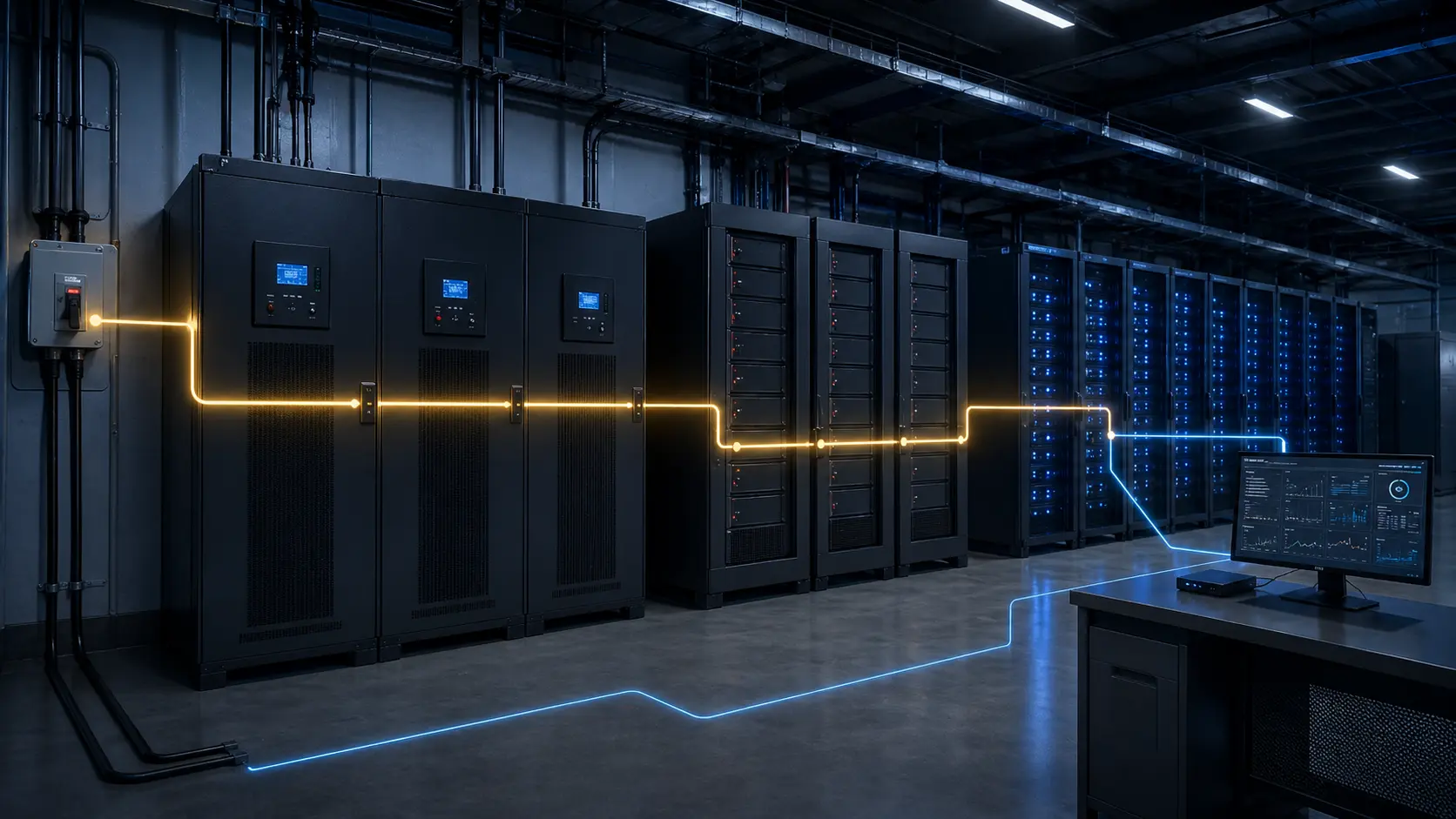
The correct battery system depends on the actual UPS topology, load profile, cabinet arrangement, and communication requirements.
UPS voltage platform
Confirm DC voltage, charging range, string configuration, and UPS compatibility before choosing the battery module.
Cabinet or rack layout
Review available space, cabinet depth, cable route, terminal direction, ventilation, and maintenance clearance.
BMS and communication
CAN, RS485, dry contact, alarm logic, and monitoring integration should be reviewed according to the project.
Maintenance path
A practical UPS battery design should support inspection, service access, module replacement, and safe operation.
Choose UPS batteries by runtime target, not only nominal capacity
For critical IT power, battery capacity must be translated into usable backup time under the real load. A reliable lithium UPS project should review discharge current, aging margin, UPS behavior, and cabinet space together.
Runtime is a project calculation.
The same battery capacity can produce different backup results depending on UPS voltage, load power, discharge rate, temperature, system redundancy, and expansion margin.
Planning a lead-acid to lithium upgrade? →Confirm critical load
Provide current load power, expected load growth, redundancy requirements, and which IT equipment must remain online.
Define backup time
Confirm whether the battery system must support short bridging time, generator start-up, emergency shutdown, or longer continuity requirements.
Review cabinet limits
Check available rack or cabinet space, battery weight, installation clearance, cable access, and room layout before finalizing the system.
Match BMS settings
Protection thresholds, communication, discharge limits, parallel logic, and alarm behavior should be aligned with the backup architecture.
Lithium UPS battery cabinets should be easy to install and maintain
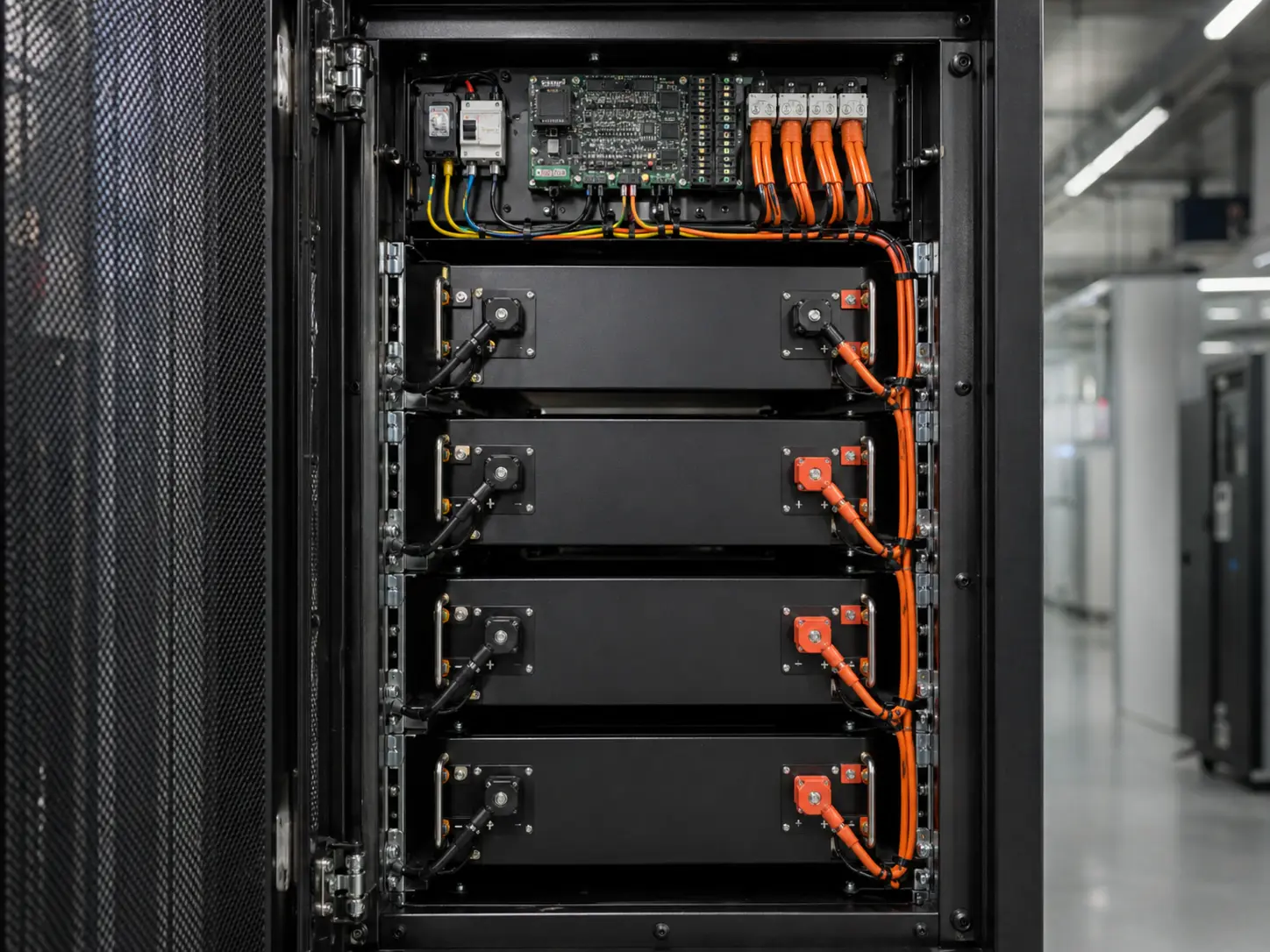
Battery cabinet design affects installation time, wiring safety, service access, thermal management, inspection efficiency, and replacement workflow. Cabinet planning should be reviewed together with the UPS and room layout.
Cabinet fit and service clearance
Confirm cabinet depth, door access, module pull-out space, cable bend radius, rear clearance, and maintenance access.
Terminal direction and wiring path
Front or rear terminals, cable routing, connector type, busbar design, and harness layout should match the actual cabinet environment.
Monitoring and alarm visibility
Battery system status, alarms, communication options, and maintenance records help operators manage backup readiness more clearly.
UPS battery backup for data centers, server rooms, telecom rooms, and edge sites
Lithium UPS systems support a wide range of critical environments where uptime, compact installation, monitoring, serviceability, and project documentation are important.
Data centers
Backup power for critical IT infrastructure, server racks, storage systems, network equipment, and facility continuity.
Server rooms
UPS battery backup for enterprise IT rooms, small data rooms, and business continuity systems.
Telecom rooms
Battery backup for communication equipment, telecom cabinets, and distributed network infrastructure.
Edge computing
Compact lithium UPS backup for remote edge sites, local computing nodes, and distributed IT infrastructure.
Industrial IT power
Backup power for control systems, monitoring equipment, automation infrastructure, and critical digital operations.
Information needed before confirming a UPS battery solution
A correct quotation should be based on technical details, not only a battery model name. The following information helps define voltage, runtime, cabinet layout, BMS configuration, communication, and delivery requirements.

Confirm voltage platform, charging range, battery string structure, and UPS compatibility requirements.
Provide load power, required backup time, discharge profile, redundancy requirement, and future expansion expectation.
Check available dimensions, installation direction, cabinet depth, cable route, and maintenance clearance.
Review room temperature, ventilation, heat management, operating environment, and site conditions.
Confirm voltage, current, temperature, balancing, alarm, short-circuit protection, and parallel logic.
Define CAN, RS485, dry contact, monitoring platform, alarm logic, and system integration needs.
FAQ about data center UPS battery backup
These questions help buyers evaluate lithium UPS battery backup systems for data centers, server rooms, telecom rooms, edge sites, and critical IT power applications.
Battery voltage, runtime, cabinet space, communication, BMS protection, maintenance access, and documentation should all be reviewed before selecting the final solution.
A data center UPS battery backup system provides stored energy for critical IT loads when utility power fails or becomes unstable. It normally works with UPS equipment, battery cabinets, BMS protection, power distribution, monitoring, and runtime planning.
LiFePO4 batteries are often evaluated for data center UPS backup because they can support compact cabinet design, longer lifecycle planning, integrated BMS protection, faster project-level monitoring, and more predictable maintenance compared with many traditional battery approaches.
Important factors include UPS DC voltage, load power, required runtime, cabinet space, battery chemistry, discharge current, charger behavior, BMS settings, communication requirements, thermal conditions, installation access, maintenance plan, and documentation requirements.
Lithium UPS batteries may replace lead-acid batteries in some data center projects, but the voltage platform, UPS charger behavior, cabinet dimensions, protection logic, communication requirements, and runtime targets must be reviewed before confirming the replacement plan.
Rack mount lithium UPS batteries can be suitable for data centers, server rooms, network rooms, and edge sites when the battery module fits the rack structure, UPS voltage platform, runtime target, cable routing, and communication requirements.
Chalong Fly supports data center UPS battery backup projects based on voltage platform, capacity, cabinet layout, BMS configuration, communication options, wiring harness integration, labeling, packaging, and OEM or project-based supply requirements.
Plan your lithium UPS battery backup system around real critical power requirements
Chalong Fly supports LiFePO4 UPS battery backup projects for data centers, server rooms, telecom rooms, edge computing sites, and industrial IT power systems. The right solution is confirmed according to UPS voltage, load profile, runtime target, battery cabinet layout, BMS protection, communication requirements, and delivery needs.
Discuss Your UPS Project