


The Ultimate Guide to Industrial Motive Power Batteries (2026 Edition)
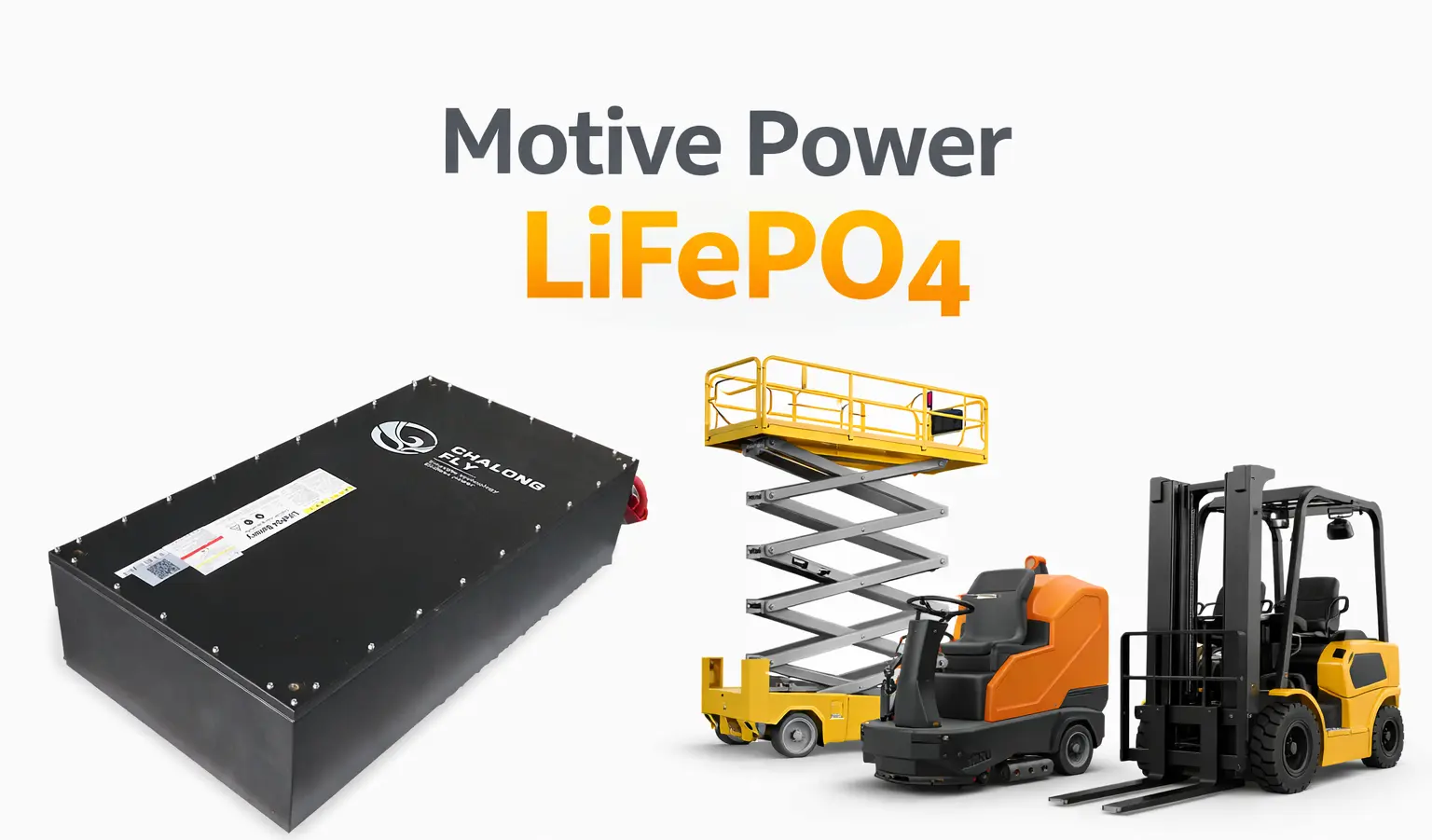
The industrial landscape is undergoing a silent yet profound engineering revolution. For over a century, heavy-duty machinery—from robust warehouse material handling equipment to compact floor sweepers—relied almost exclusively on legacy lead-acid batteries. Today, driven by the intense efficiency demands of Industry 4.0, that paradigm has shifted entirely.
Fleet managers, equipment Original Equipment Manufacturers (OEMs), and facility operators are no longer merely seeking a power source; they require dynamic energy platforms that guarantee zero maintenance, rapid charging cycles, and a radically optimized Total Cost of Ownership (TCO). The definitive engineering answer to these demanding industrial metrics is the LiFePO4 (Lithium Iron Phosphate) Motive Power Battery.
As a specialized OEM/ODM battery manufacturer, Chalong Fly (CLF) has engineered this comprehensive whitepaper to decode the technical architecture of modern motive power systems, objectively compare them to legacy technologies, calculate true ROI, and outline the precise specifications required to electrify your industrial fleet.
- 1. Defining Motive Power: Beyond Simple Energy Storage
- 2. The Engineering Showdown: Lead-Acid vs. LiFePO4
- 3. Financial Breakdown: Calculating True TCO and ROI
- 4. Extreme Environments & Thermal Management
- 5. High-Performance Industrial Applications
- 6. The Anatomy of a Hardcore OEM Lithium Battery
- 7. Global Safety & Compliance Certifications
- 8. Frequently Asked Questions (FAQ)
1. Defining Motive Power: Beyond Simple Energy Storage
To fully grasp the technical superiority of this technology, we must sharply differentiate it from static power solutions. Industrial batteries are engineered into three distinct categories based on their electrochemical delivery profiles:
- Starter Batteries (SLI): Engineered to deliver a massive, instantaneous burst of current (Cold Cranking Amps) for a few seconds to ignite a combustion engine.
- Stationary Energy Storage Systems (ESS): Designed for fixed-location grid applications, slowly discharging energy over prolonged periods (0.1C to 0.5C) in environmentally controlled settings.
- Motive Power Batteries (Traction Batteries): Engineered specifically for relentless motion and sustained torque. These highly robust packs must output continuous high C-rate currents (frequently 1C to 3C) to propel electric vehicles and lift heavy payloads. Furthermore, they are structurally designed to absorb severe mechanical shock, high-frequency vibrations, and drastic temperature fluctuations over multi-shift operations.
2. The Engineering Showdown: Lead-Acid vs. LiFePO4
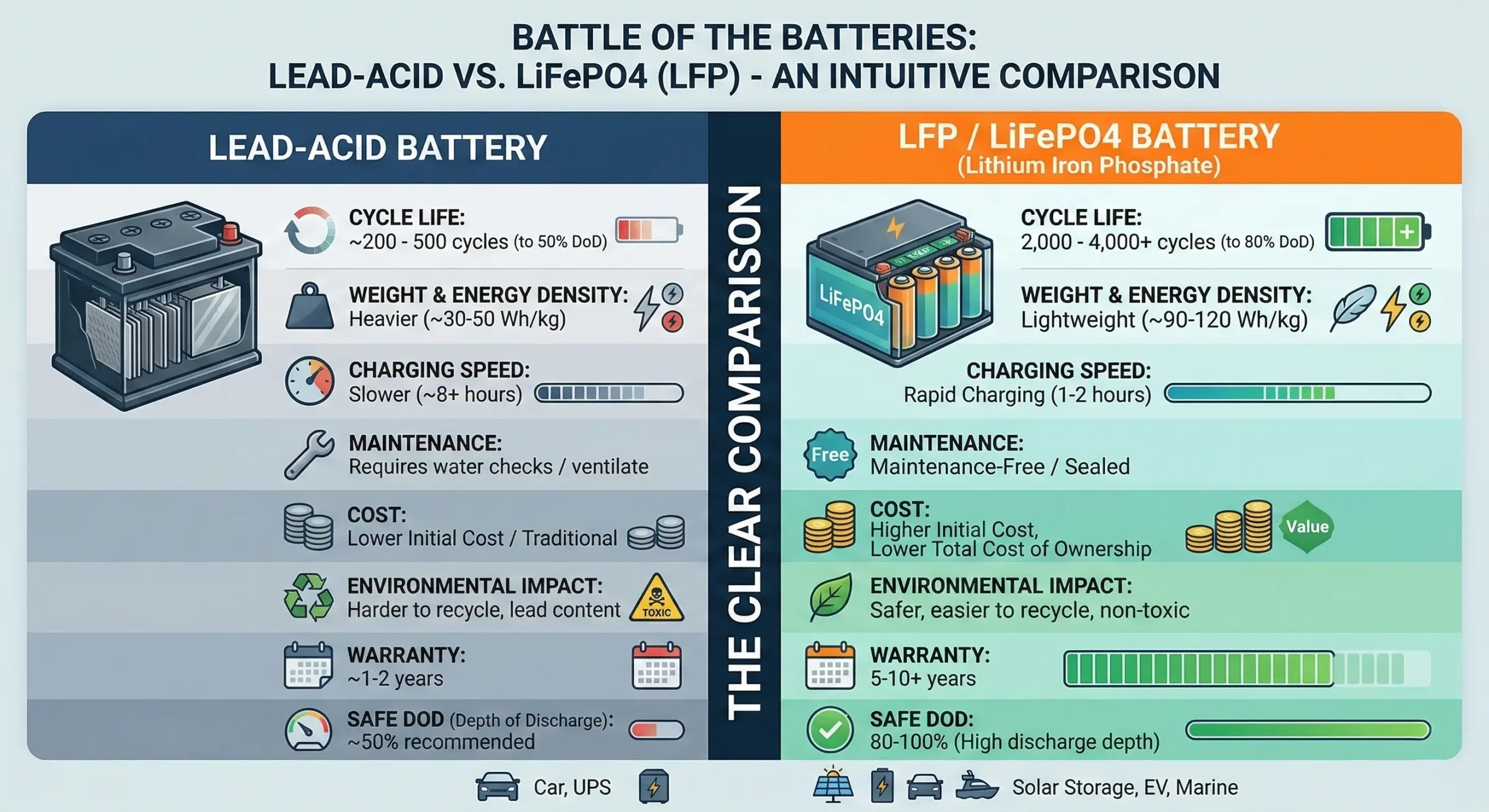
Why are top-tier industrial brands aggressively phasing out lead-acid? While traditional lead-acid batteries boast a lower initial capital expenditure (CapEx), their electrochemical limitations introduce massive hidden operational costs (OpEx).
Defeating Peukert's Law and Voltage Sag
One of the most critical flaws of lead-acid chemistry in motive applications is its susceptibility to Peukert's Law. As the discharge rate increases (e.g., when a scissor lift is raising a heavy payload), a lead-acid battery’s available capacity plummets dramatically. A nominal 100Ah lead-acid battery under a heavy load may only yield 60Ah of usable energy.
Additionally, lead-acid suffers from severe voltage sag. As the battery drains, the voltage drops proportionally, causing equipment motors to run hotter, slower, and less efficiently. Conversely, LiFePO4 maintains a remarkably flat discharge curve. It consistently delivers nearly 100% of its rated capacity and maintains peak voltage right until depletion, ensuring your machinery operates at maximum torque from the beginning of the shift to the end.
Opportunity Charging (The Operational Game Changer)
A standard lead-acid battery requires a rigid charging regimen: 8 hours of charging followed by an 8-hour cooling period. For multi-shift facilities, this mandates purchasing 2 to 3 batteries per machine and dedicating expansive warehouse space for hazardous, ventilated battery-swapping rooms equipped with heavy hoists.
Due to its exceptionally low internal resistance, LiFePO4 chemistry easily accommodates high-current Opportunity Charging. Operators can rapidly replenish the battery by plugging it into a high-output charger during 15-to-30-minute breaks. With zero "memory effect" and active thermal management, a single lithium battery can seamlessly sustain 24/7 continuous operations.
3. Financial Breakdown: Calculating True TCO and ROI
Procurement teams must look beyond the sticker price. Total Cost of Ownership (TCO) is the only accurate metric for industrial equipment. Let's compare the 5-year TCO of a standard 48V forklift running on Lead-Acid vs. LiFePO4 in a 2-shift operation.
- Initial Cost (Needs 2 batteries for 2 shifts): $6,000
- Battery Swapping Labor (15 mins/day @ $25/hr): $4,500
- Watering/Maintenance Labor: $2,500
- Replacement Cost (Replaced at Year 3): $6,000
Estimated 5-Year Cost: $19,000+
LiFePO4 Motive Power (5-Year Scenario):
- Initial Cost (1 battery handles all shifts via opportunity charging): $8,500
- Battery Swapping Labor: $0
- Watering/Maintenance Labor: $0
- Replacement Cost (Lasts 10+ Years / 5000 cycles): $0
Estimated 5-Year Cost: $8,500
Conclusion: The LiFePO4 system pays for itself in less than 18 months, yielding over $10,000 in savings per machine over a 5-year lifecycle. Multiply that by a fleet of 50 machines, and the financial impact is staggering.
4. Extreme Environments & Thermal Management
Industrial machinery does not always operate in a pristine 25°C warehouse. Cold storage facilities, outdoor ports, and high-heat manufacturing plants place immense stress on battery cells.
- Cold Storage (Down to -20°C): Standard lithium cells cannot be charged below freezing without causing lithium plating, which destroys the cell. High-end motive power packs utilize integrated Active Heating Modules. The BMS detects freezing temperatures and uses the charger's energy to warm the internal heating pads before allowing charge current to flow to the cells.
- High Heat Environments: LiFePO4 naturally possesses a high thermal runaway threshold (over 270°C). Combined with heat-dissipating aluminum/steel enclosures and intelligent BMS throttling, these batteries safely operate in environments up to 60°C without the risk of explosion associated with older NMC lithium chemistries.
5. High-Performance Industrial Applications
Chalong Fly engineers bespoke lithium platforms that serve as superior drop-in replacements across multiple demanding sectors. Here is where the advantages of lithium motive power are most pronounced:
- Aerial Work Platforms (AWP) & Scissor Lifts: At maximum elevation, stability and consistent hydraulic pressure are non-negotiable. LiFePO4 ensures the hydraulic pumps receive steady voltage. Note: As lithium is significantly lighter, expert OEMs like CLF design custom steel ballasts directly into the battery casing to maintain the equipment's strict center of gravity and prevent tipping.
- Floor Cleaning Machines & Sweepers: Indoor environments such as airports and hospitals demand zero toxic off-gassing and zero acid spills. Completely sealed, maintenance-free lithium packs guarantee pristine floors and maximize the square footage cleaned per charge.
- Low-Speed Electric Vehicles (LSEVs) & Golf Carts: Shedding up to 70% of the battery weight instantly enhances vehicle acceleration, reduces suspension wear, and allows the pack to efficiently capture kinetic energy via regenerative braking.
- Marine & Trolling Motors: Engineered with IP67-rated waterproof enclosures and conformally coated internal electronics, these packs endure deep discharges and harsh saltwater environments without internal corrosion.
- RV & Deep Cycle: Delivering high-density, off-grid power capable of running heavy inductive loads (like HVAC compressors and microwaves) for extended periods.
6. The Anatomy of a Hardcore OEM Lithium Battery
An industrial-grade motive power battery requires uncompromising engineering. At Chalong Fly, we do not simply package cells into plastic boxes; we fabricate armored power ecosystems designed to outlast the equipment they drive.
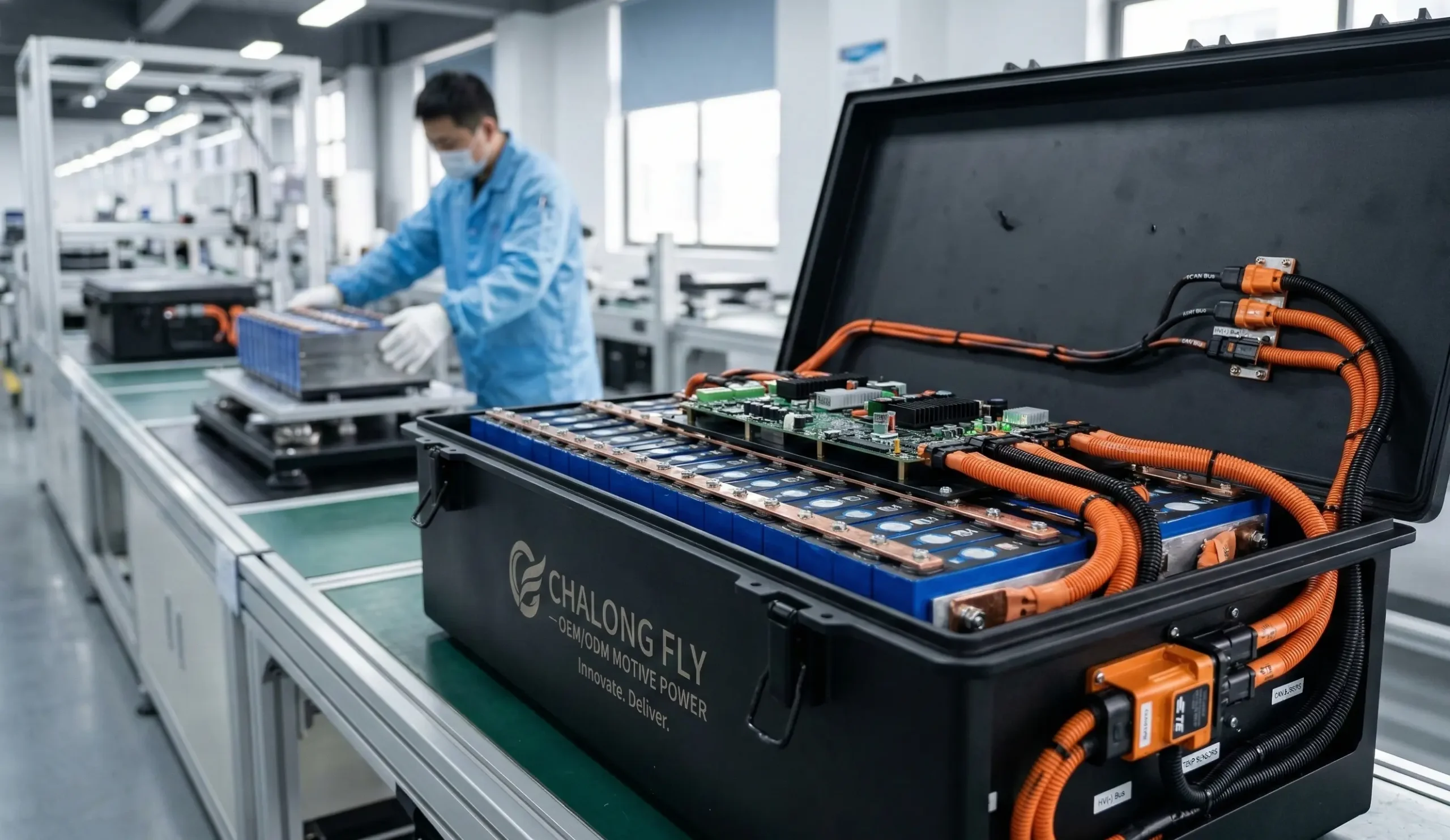
- Cold-Rolled Steel Enclosures & Ballast Integration: We utilize heavy-duty, powder-coated steel cases customized to precise dimensions. Internal anti-vibration structural matrices securely lock each cell in place, insulating them from intense mechanical shock.
- Advanced Telemetry BMS (Battery Management System): Far beyond simple over-charge protection, our proprietary BMS employs active cell balancing to maximize cycle life. More importantly, it features CANBus J1939 and RS485 communication protocols, allowing the battery to seamlessly integrate with the vehicle's telemetry system to relay real-time state of charge (SoC), voltage, and diagnostic data to the fleet manager's dashboard.
- IPC-620 Compliant Wire Harnesses: Motive power requires managing massive current spikes. Utilizing our specialized wire harness manufacturing capabilities, we employ heavy-gauge, low-impedance copper cabling terminated with industrial-grade TE Connectivity or Amphenol connectors. This guarantees negligible heat generation even under maximum continuous load.
7. Global Safety & Compliance Certifications
Deploying industrial batteries at scale requires strict adherence to global safety standards. When selecting an OEM partner, ensure their motive power packs comply with:
- UN38.3: The mandatory international certification for the safe transport of lithium-ion batteries by air, sea, and land.
- IEC 62619: The safety standard for secondary lithium cells and batteries for use in industrial applications, evaluating internal short circuits, impact, and thermal abuse.
- UL 2580: The critical Underwriters Laboratories standard specifically evaluating batteries for use in Electric Vehicles (EVs) and motive power applications, ensuring they can withstand severe crashes and electrical faults.
The transition to lithium motive power is the defining industrial upgrade of this decade. Whether you are an Original Equipment Manufacturer (OEM) seeking a reliable partner for bespoke battery integration, or a facility director upgrading an existing fleet, Chalong Fly possesses the R&D depth and manufacturing scale to architect your ideal power solution.
👉 Contact our engineering team today to request a custom TCO analysis and technical blueprint for your equipment.