

High Voltage vs. 48V: Why Commercial Electric Vessels Are Switching to 350V+ Systems
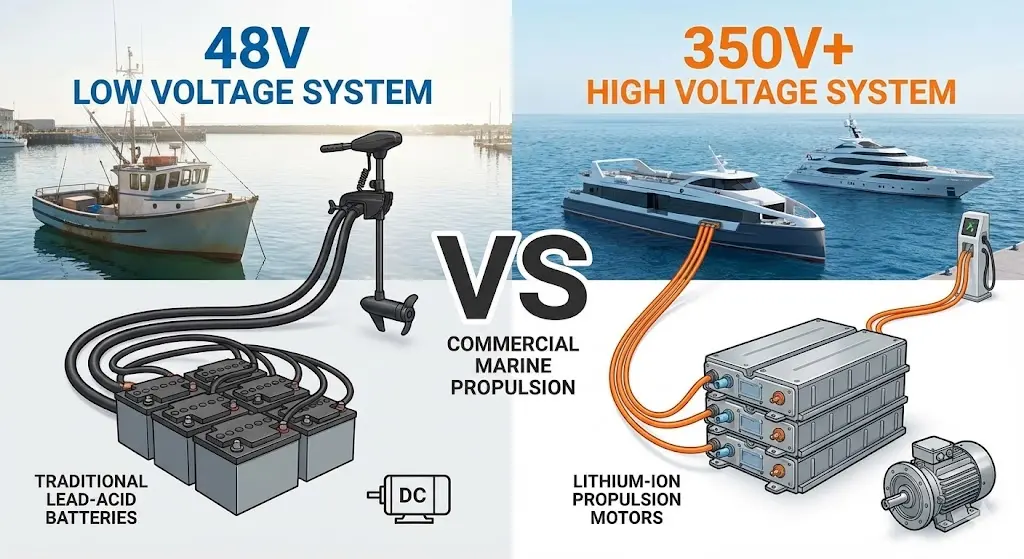
The marine industry is undergoing a silent revolution. While 12V, 24V, and 48V systems have long been the standard for small fishing boats and trolling motors, they hit a "performance wall" when applied to larger commercial vessels, speedboats, and electric yachts.
For vessel owners and naval architects planning to electrify fleets, the shift to High Voltage (HV) Systems (96V, 144V, 350V, up to 600V) is not just an option—it is an engineering necessity.
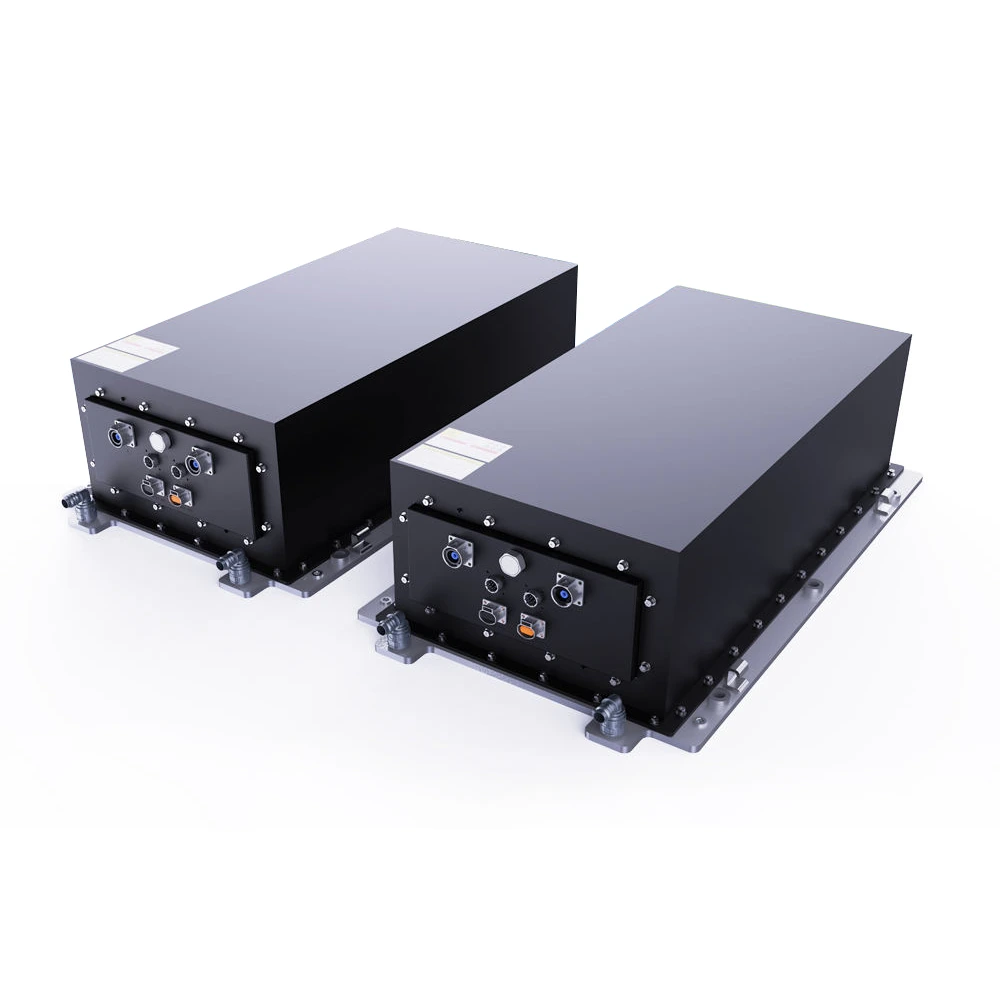
Here is why upgrading to a High Voltage LiFePO4 system, like the Chalong Fly (CLF) 51.2V 280Ah Modular Series, is the key to unlocking true electric propulsion power.
1. Efficiency: The Physics of P = V × I
The primary advantage of high voltage is efficiency. To achieve higher power (Watts), you can either increase Voltage (V) or Current (Amps).
- Low Voltage (48V): To run a 20kW motor, a 48V system requires over 400 Amps of current. This generates massive heat and requires thick, heavy copper cables.
- High Voltage (350V): The same 20kW motor at 350V draws only ~57 Amps. Result: Significantly less energy is lost as heat, meaning more battery power goes directly to the propeller.
2. Weight Savings & Cable Cost
In a marine environment, weight is the enemy of speed. High-current 48V systems require thick, heavy cabling (often 70mm² or 95mm²) to prevent melting. By switching to a high-voltage system (e.g., 300V-600V), you can use much thinner, lighter cables. For a 15-meter ferry, this can save hundreds of kilograms in cabling weight alone, directly improving range and payload capacity.
3. Faster Charging Speeds
Commercial vessels cannot afford to sit at the dock for 10 hours. High-voltage battery systems enable DC Fast Charging. While a 48V bank is typically limited to slow AC charging, a CLF High Voltage System (equipped with our advanced liquid-cooling thermal management) can accept high-power DC charging, getting your vessel back on the water in a fraction of the time.
4. Why Safety Standards (DNV/IP67) Matter More in HV
Moving to high voltage requires strict safety protocols. This is where Chalong Fly distinguishes itself from generic battery assemblers. Our CLF-51280-HV Modules are engineered to DNV Marine Standards:
- IP67 Waterproofing: Fully sealed metal enclosure to prevent short circuits in humid engine rooms.
- HVIL (High Voltage Interlock Loop): Automatically cuts power if a connector is loose.
- Liquid Cooling: Maintains optimal cell temperature during heavy continuous discharge.
| System Architecture | 48V Low Voltage | 350V+ High Voltage |
|---|---|---|
| Applications | Trolling, Tenders | Commercial, Speed Yachts |
| Energy Loss | High (I²R resistance) | Minimal (Low Current) |
| Fast Charging | Rarely Supported | Full DC Support |
| Cable Weight | Heavy / Bulky | Light / Compact |
Conclusion
If you are powering a trolling motor, 48V is fine. But for electric ferries, workboats, and high-speed yachts, a High Voltage system is the only viable path forward.
Ready to design your powertrain? Chalong Fly specializes in custom High Voltage Marine Battery Systems (96V – 600V).