


LiFePO4 vs. Sodium-Ion Batteries: Choosing the Right Chemistry for Your Custom ESS
When engineering an Energy Storage System (ESS) for your brand or industrial project, the most critical decision happens before a single wire is connected: choosing the right battery chemistry.
For years, Lithium Iron Phosphate (LiFePO4 or LFP) has dominated the residential and commercial energy storage market. However, a powerful new contender has rapidly emerged: Sodium-Ion (Na-Ion) batteries. As a leading battery manufacturer, Chalong Fly (CLF) integrates both chemistries. But how do you decide which one is right for your project?
In this guide, we will break down the technical differences between LiFePO4 and Sodium-ion to help you make an informed decision for your next project.
The Reigning Champion: LiFePO4 (LFP) Batteries
LiFePO4 has become the gold standard for renewable energy storage, powering everything from residential solar setups like our CF-RackPro-5 to massive C&I containerized systems.
Key Advantages of LiFePO4:
- Unmatched Cycle Life: High-quality LFP cells can easily exceed 6,000 cycles (up to 10-15 years of daily use), offering an incredible return on investment.
- High Energy Density: Compared to older lead-acid or emerging sodium technologies, LFP packs more power into a smaller physical footprint, making it ideal for compact indoor installations.
- Thermal Stability: LFP is inherently safe and highly resistant to thermal runaway, providing peace of mind for indoor residential applications.
The Rising Challenger: Sodium-Ion (Na-Ion) Batteries
Sodium-ion is the most exciting breakthrough in recent battery manufacturing. Instead of relying on expensive and scarce lithium, it utilizes abundant sodium, offering a unique set of strategic advantages. We highly recommend exploring our CF-SodiumWal-5 series for these specific use cases.
Key Advantages of Sodium-Ion:
- Extreme Temperature Resilience: This is the killer feature. Sodium-ion batteries can maintain over 90% of their capacity at -20°C (-4°F). If you are deploying ESS in freezing climates (like Northern Europe or Canada), Sodium-ion eliminates the need for expensive internal heating systems.
- Cost-Effective and Abundant: Sodium is widely available and significantly cheaper to extract than lithium, shielding your supply chain from lithium price volatility.
- Transportation Safety: Unlike lithium, sodium-ion batteries can be discharged to exactly 0 volts without damaging the internal structure, making global shipping incredibly safe and compliant.
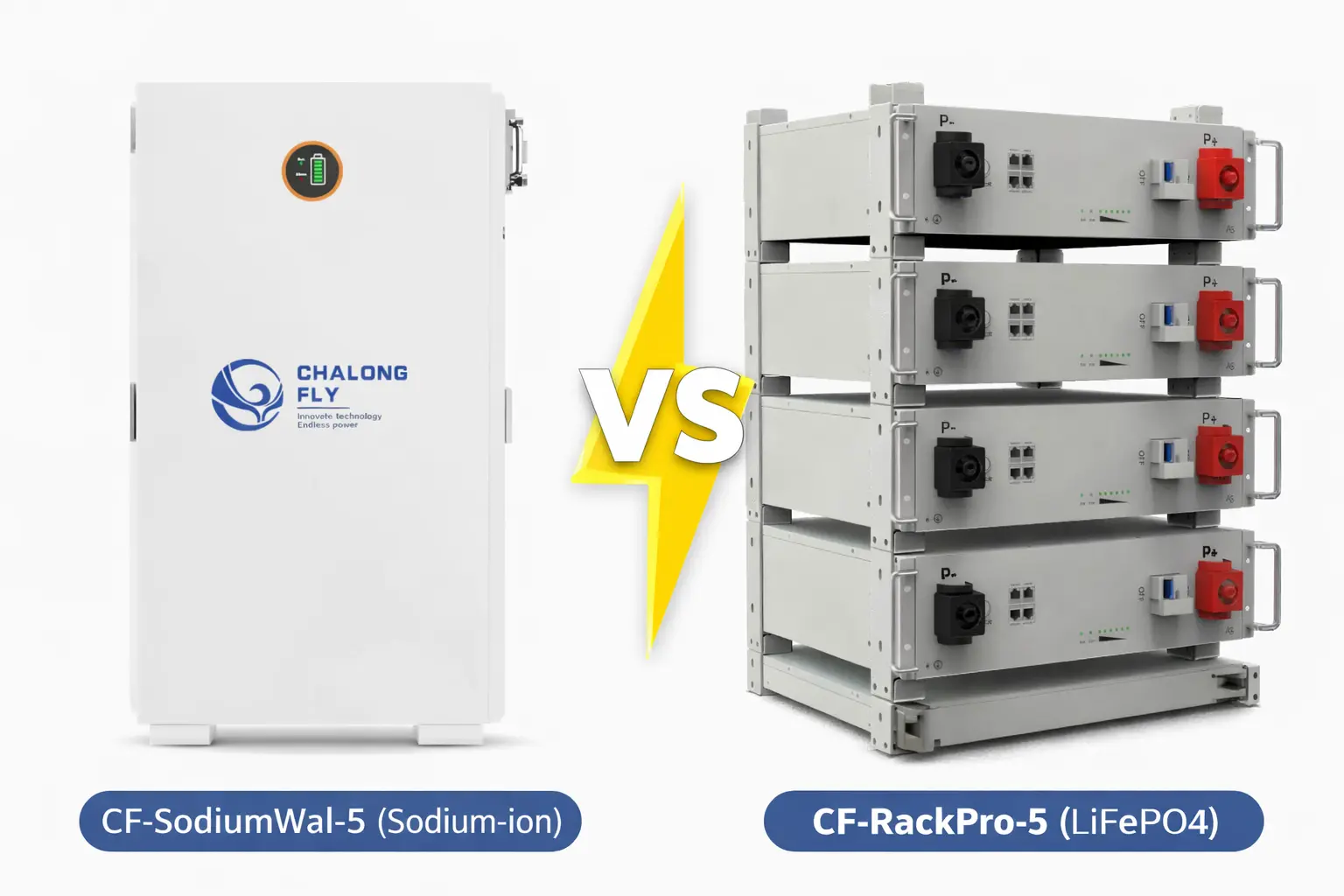
Head-to-Head Comparison: LiFePO4 vs. Sodium-Ion
| Feature | LiFePO4 (LFP) | Sodium-Ion (Na-Ion) |
|---|---|---|
| Cycle Life | 6,000+ Cycles (Excellent) | 3,000 - 4,000 Cycles (Good) |
| Energy Density | High (Compact size) | Moderate (Slightly larger footprint) |
| Cold Weather Performance | Capacity drops significantly below 0°C | Excellent (Retains 90% at -20°C) |
| Raw Material Cost | Subject to Lithium market pricing | Very Low and Stable |
| Best Application | Indoor Residential & Standard C&I | Extreme Climates & Grid-Scale Backup |
Making the Right Choice for Your ODM Project
So, which chemistry wins? The answer entirely depends on your deployment environment and budget strategy.
If you require a compact system with maximum cycle life for a typical residential solar setup, LiFePO4 remains the absolute best choice. However, if your target market experiences harsh winters, or if you are looking for a highly cost-effective solution for large-scale backup power, Sodium-Ion is the technology of the future.
At Chalong Fly, we don't force a one-size-fits-all solution. Our R&D team works closely with you to select the optimal chemistry, integrate a smart BMS, and design custom enclosures and wire harnesses that elevate your brand.